MISSION IMPOSSIBLE: Search for the elusive Ingram's Brown Snake - Article published in AHS Red Bellied Courier (2022)
Posted by Ross McGibbon on 31st Mar 2022
MISSION IMPOSSIBLE
Search for the elusive Ingram's Brown Snake
By Ross McGibbon
Of the nine species of brown snakes in Australia, Ingram's Brown Snake (Pseudonaja ingrami) is arguably the hardest to find. They inhabit the vast blacksoil plains of western Queensland and the Barkly Tableland of the Northern Territory. Like most herpetofauna that inhabit blacksoil, Ingram's Browns shelter below ground in the maze of cracks that form as the baking sun dries the soil. As such, they are virtually impossible to encounter unless they are basking or active on the surface.
The low detectability of Ingram's Brown Snakes in the wild is compounded by the severe and unpredictable weather patterns in these regions. Inland ecosystems are heavily reliant on rainfall and temperature, and if you time your trip poorly, you can drive thousands of kilometres and spend days searching, all for nothing. That pretty much sums up my last two attempts to find this species.
Finding P. ingrami would be an amazing moment in its own right, but for me there is another reason this search has become particularly important. It would complete my quest to find all nine species in the genus Pseudonaja. After tracking down the other eight across Australia, it seems fitting that the hardest to find should be the one I save until last.
It's late November 2021, and the conditions for attempt number three appear ideal. There has been good rainfall this season and over the past month. Moreover, Richie and I have scheduled our week-long trip to coincide with the first predicted spell of high temperatures for the season, hoping for a spike in reptile activity. However, just days before leaving, the weather takes a turn for the worse. An enormous band of low-pressure systems forms, covering almost the entire eastern half of the state. Our 42°C daytime temperature predictions plummet, and so does the probability of finding our target species.
Despite the less-than-ideal conditions, we have our hearts set on this trip and decide it's still worth a shot, albeit a long shot. We depart the Sunshine Coast and arrive in far-western Queensland following two days of driving in heavy rain. With 2,000km on the clock, we don't have one reptile to show for it, and it's not how we hoped to begin the trip.
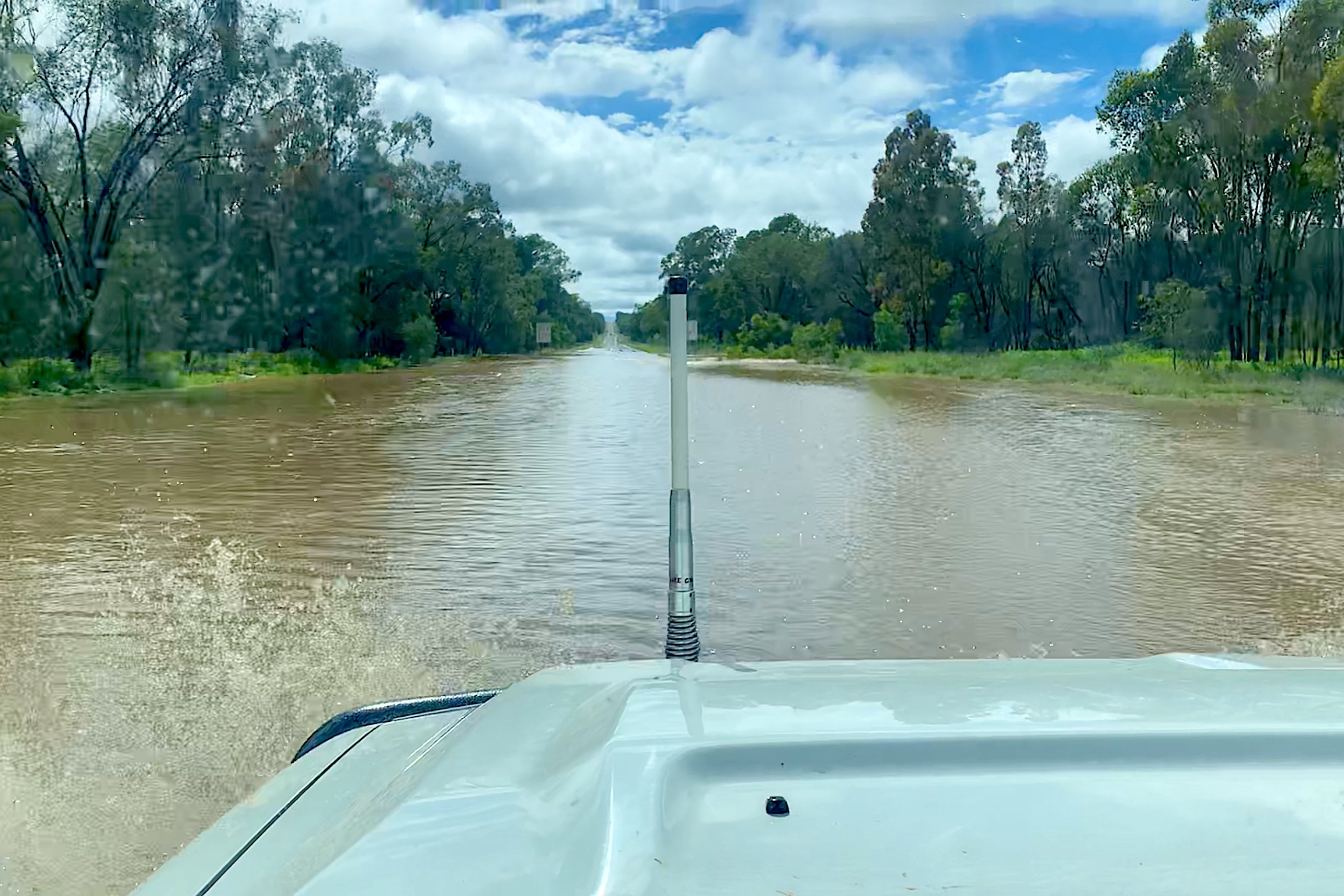
Two days and almost 2,000 kilometres of driving through heavy rain brought us to far-western Queensland, with not a reptile in sight.
On the morning of day three, we arrive in the Dajarra region. We're hoping to find a few of the easier species in the red rocky country before relocating farther south to the blacksoil, where we'll allocate the bulk of our time to searching for the elusive ingrami. For now, we begin scouting habitat for two species of diurnal lizards, Hosmer's Skinks, a new species for both Richie and me, and Ridge-tailed Monitors, aka accys. While we've both seen plenty of accys before, I'd heard of a vibrant yellow form with a dark vertebral stripe residing somewhere in this region, and I was committed to finding one on this trip.
We locate two accys around mid-morning, but they are the common red and yellow forms we've seen plenty of. As we travel further into the stony hills around Dajarra, we switch over to searching for Hosmer's Skinks. Hosmer's Skinks are common in the region, and we locate a number of the communal lizards without too much trouble. I photograph two individuals, one a lighter form and the other darker, each superbly camouflaged against the colour of the rock they are on.
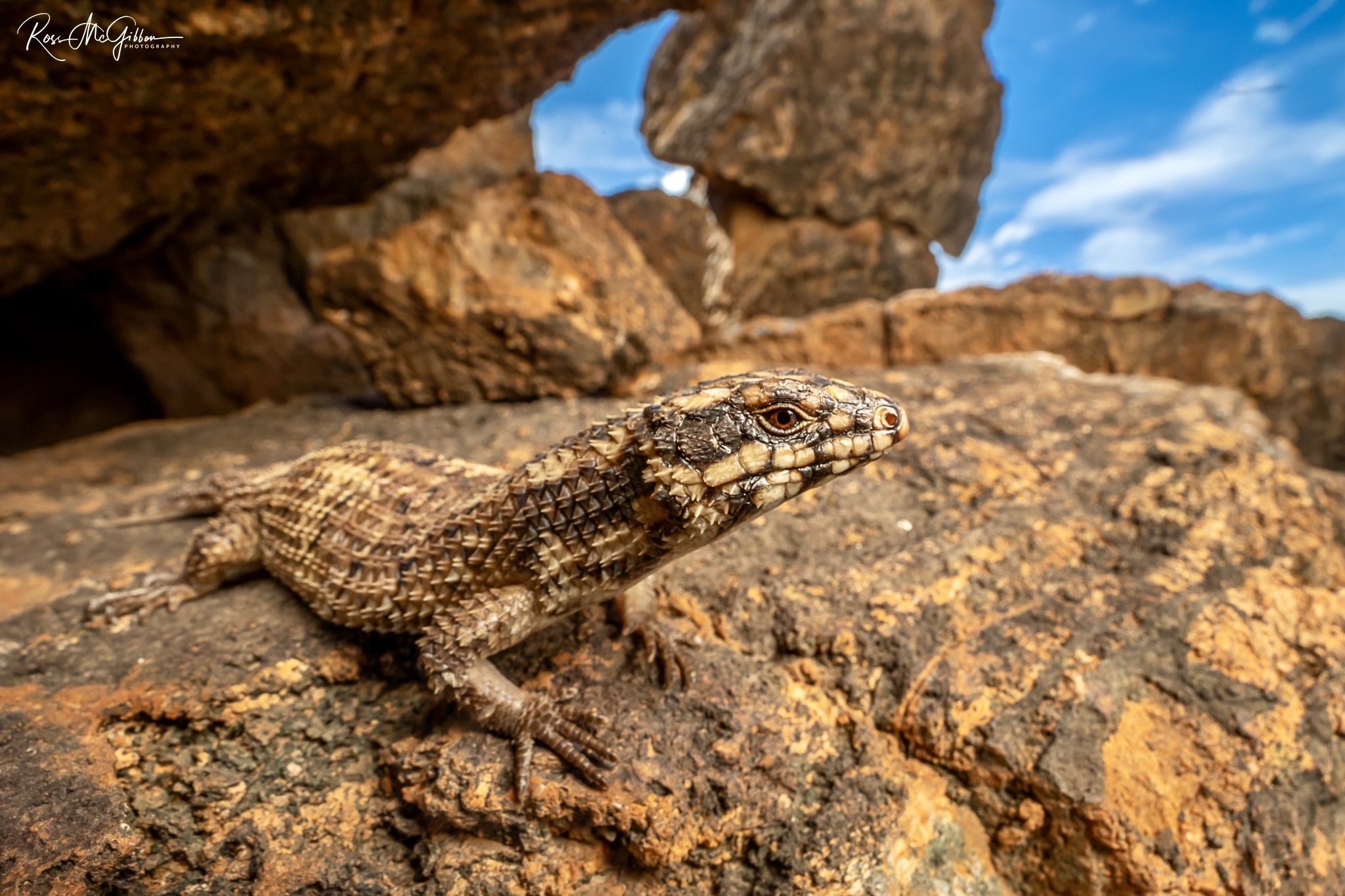
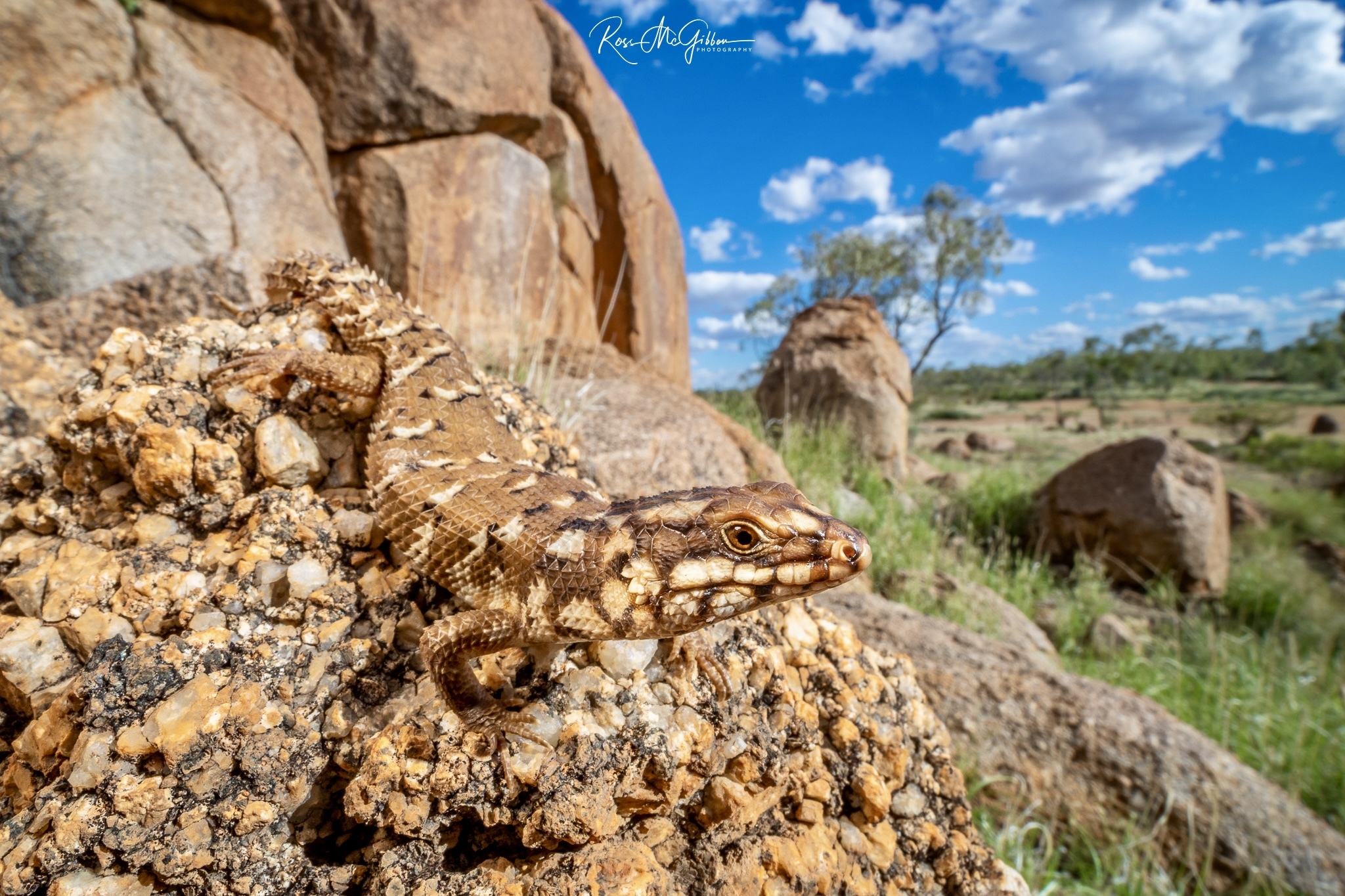
Two Hosmer’s Skinks (Egernia hosmeri), showing contrasting colour forms and superb camouflage against the surrounding rock.
We still have a few hours to kill before dark, and I can't get the image of those vivid yellow accys out of my head. Judging from photos I'd seen and some intel from a mate who'd found one before, we have a rough idea where to find them, and it's just a matter of locating similar habitat and trying our luck. I spot some boulders that look promising and head cross-country until we reach them. Within fifteen minutes of examining the boulders, I spot that familiar spiny tail just visible under a rock. I slide the lizard out from under the rock and, to my delight, out pops the handsome yellow form I wanted so badly to see.
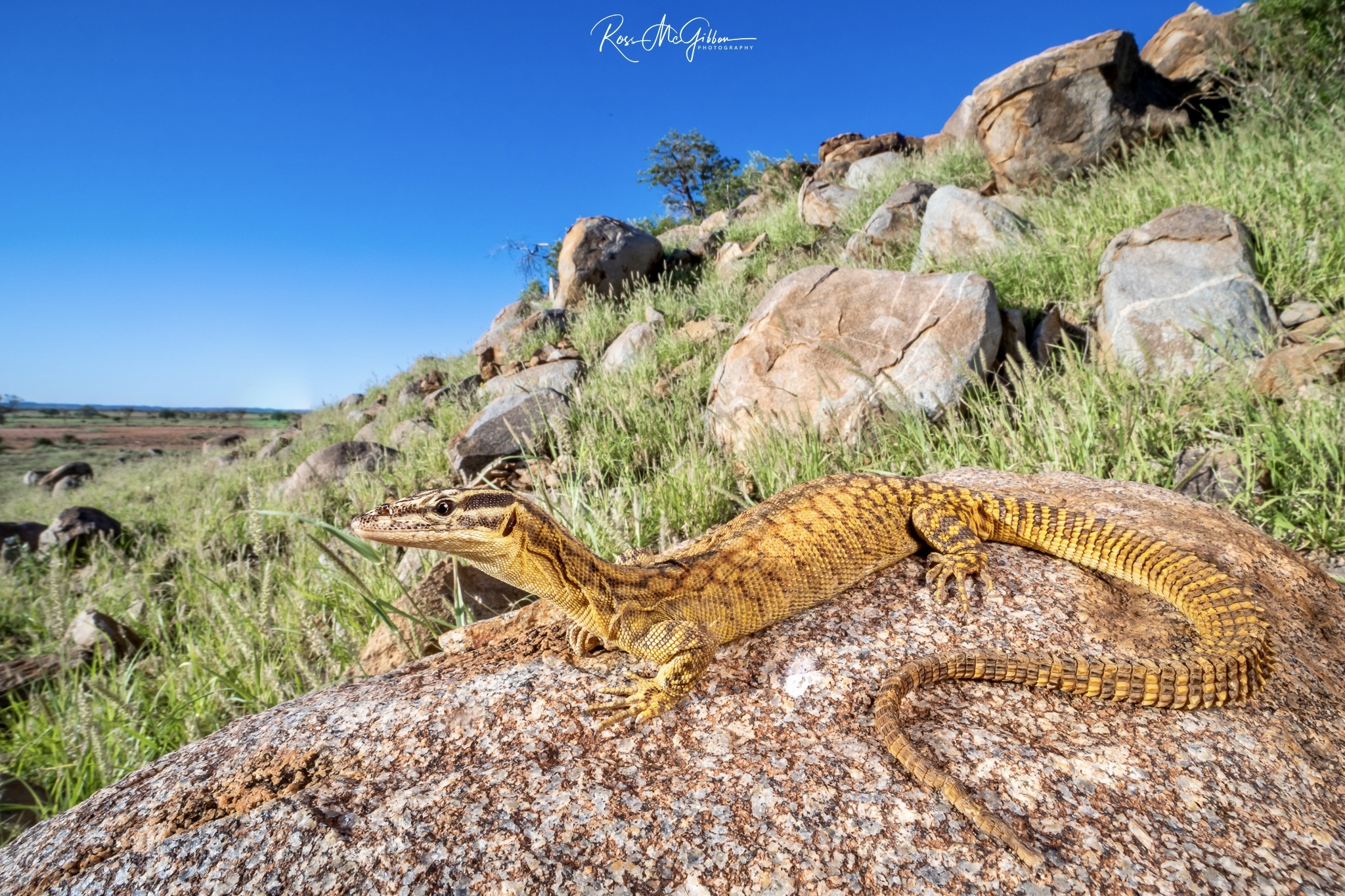
The striking golden form of a Ridge-tailed Monitor (Varanus acanthurus) found among the rocky hills near Dajarra.
Nightfall is met with anticipation. Both Richie and I are excited at the possibility of a Dajarra Death Adder tonight, our number two target species behind the ingrami. Genetically, they are most consistent with Rough-scaled Death Adders (Acanthophis rugosus). Still, specimens from the Dajarra/Selwyn Ranges region have been recognised as distinct from other surrounding populations for some time. Moreover, their impressive colouration makes them renowned among reptile keepers and breeders in captivity, and the term Dajarra Death Adder was coined to distinguish this population.
By 9pm, we've been cruising for almost two hours without so much as a gecko or sleeping dragon on the road. Further despair sets in as we notice the temperature fall to 23°C in a matter of minutes. Had we come all this way just to herp in conditions that won't support any nocturnal activity? It appears the farther north we travel, the cooler it's getting. A quick check of the radar confirms a low-pressure system near Mount Isa and the reason for the sudden drop. We turn around in the hope it warms up again. Before long, the temperature climbs back up to a respectable 26°C, and our decision proves the right one when a beautiful Dajarra Death Adder materialises out of the dark, turning our despair into delight in a split second.
Following a photoshoot with our very calm and cooperative adder, we head south to put ourselves in range of the blacksoil for the following morning. We encounter only one other snake before making camp, the token Orange-naped Snake that usually appears on uneventful nights. Richie and I joke about how unfortunate it would be if we didn't find the adder and it was the only snake we found.
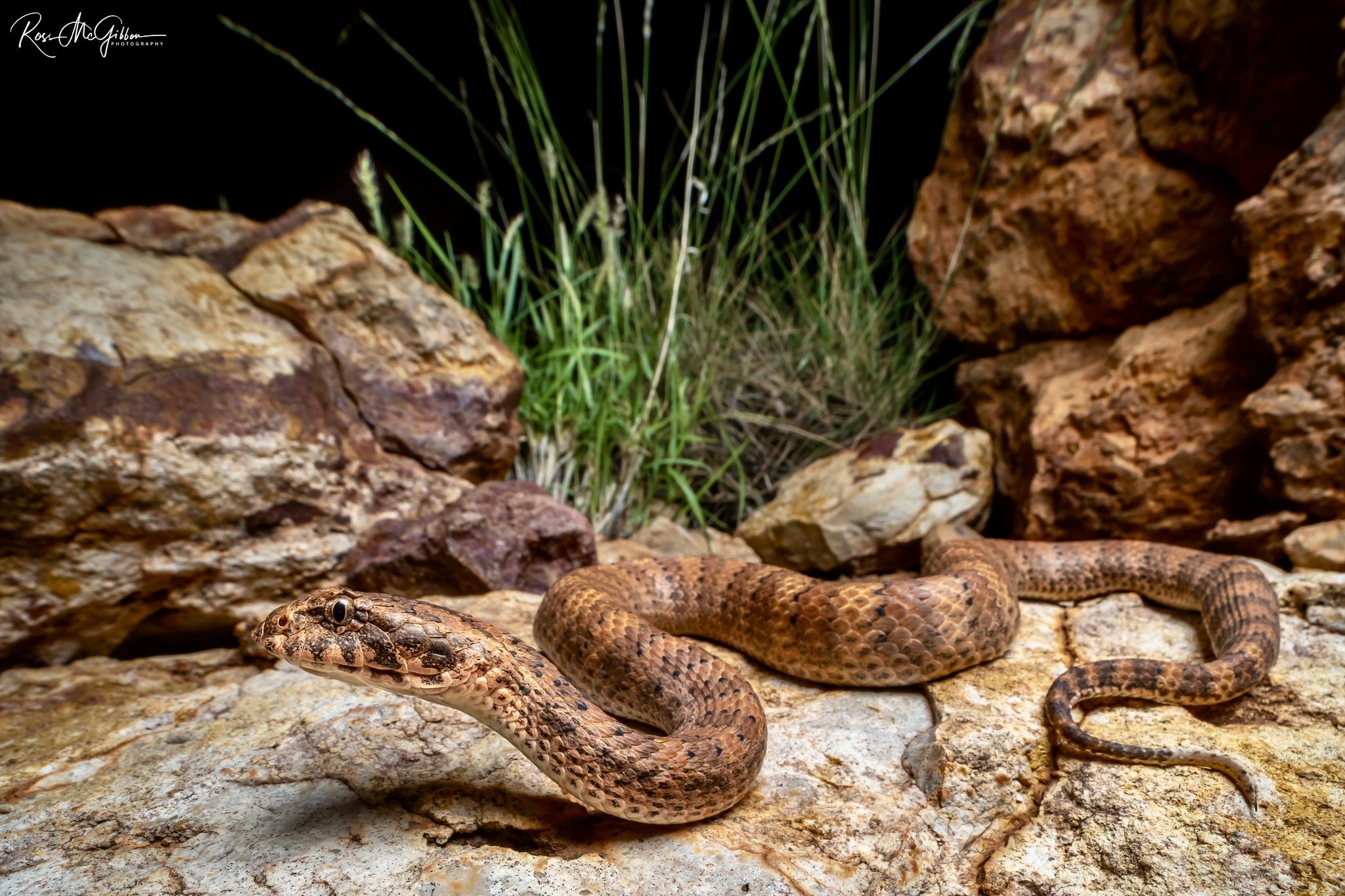
A Dajarra Death Adder (Acanthophis rugosus) encountered after the temperature finally climbed back to a respectable 26°C.
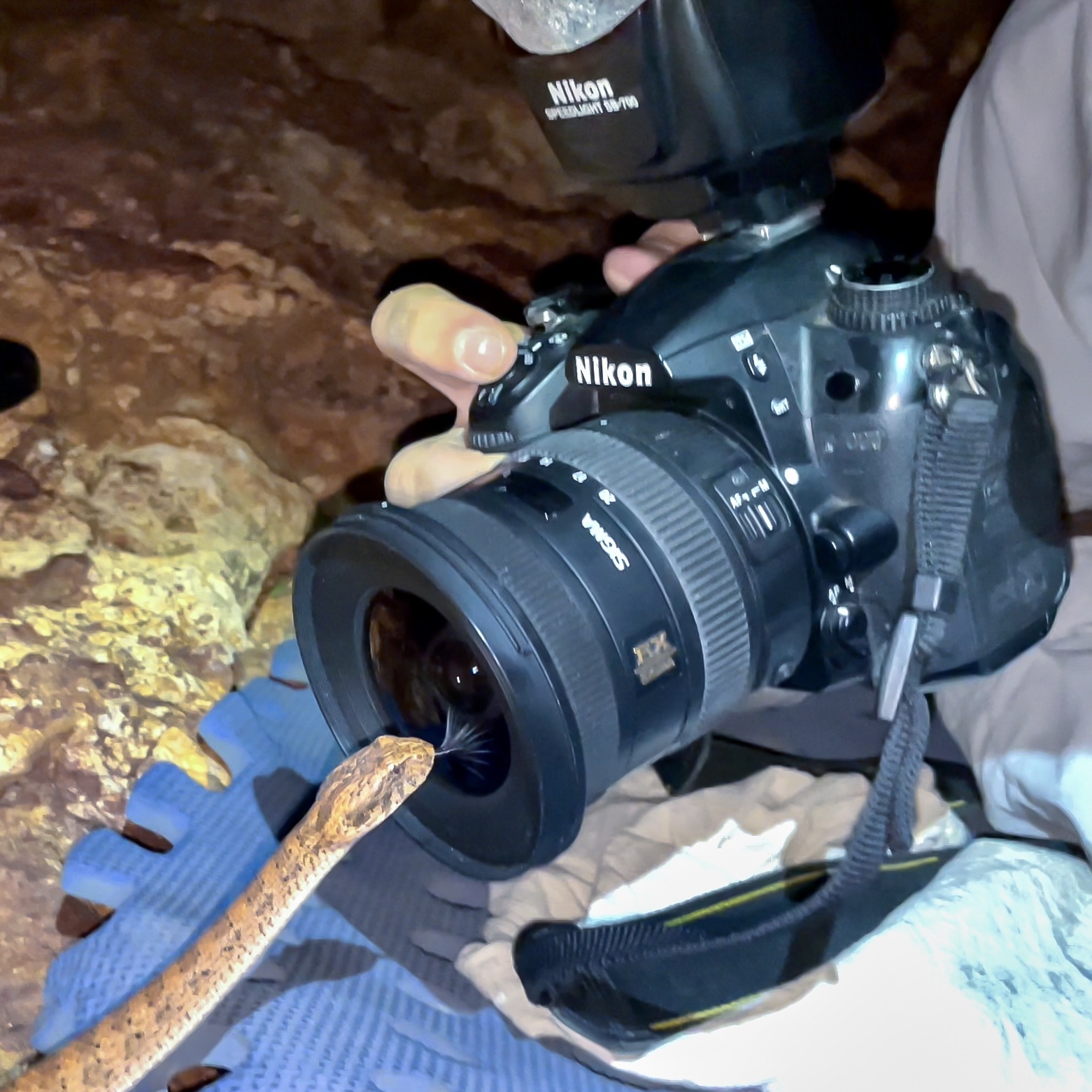
A curious Dajarra Death Adder (Acanthophis rugosus) investigating Richie’s camera lens during our photoshoot.
We rise with the sun and head for the blacksoil. On arrival, our enthusiasm is dulled by cloud cover and mild temperatures. Our best bet is to search on foot for anything basking until it warms up. The first reptile of the day is a juvenile Sharp-snouted Delma (Delma nasuta) I uncover by flipping a cowpat. Some reptiles will utilise cowpats for insulated shelter or elevated basking sites in habitats with minimal ground cover.
It's tough going, and hours pass without any sunshine or reptiles. Then, around mid-afternoon, a Spencer's Monitor appears on the track up ahead to pull us from our slump. They are a great find in this region and Richie's first-ever Spencer's. To our amazement, we encounter four more in the next 30km, and Richie can't believe his luck, getting five on his first attempt. The overcast weather isn't ideal for snakes but clearly great for Spencer's Monitors.
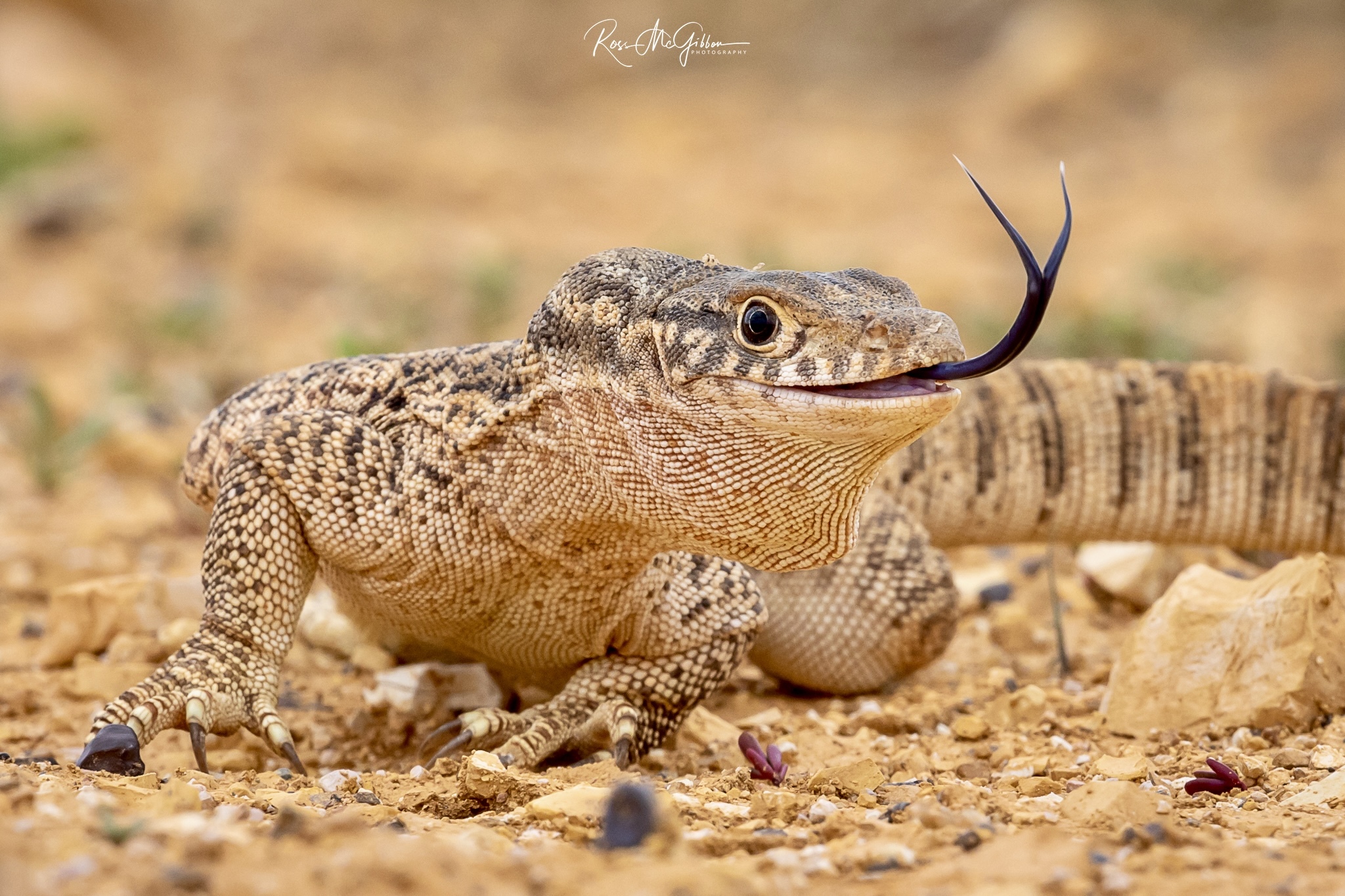
Above: An adult Spencer’s Monitor (Varanus spenceri) captured with a well-timed flick of the tongue.
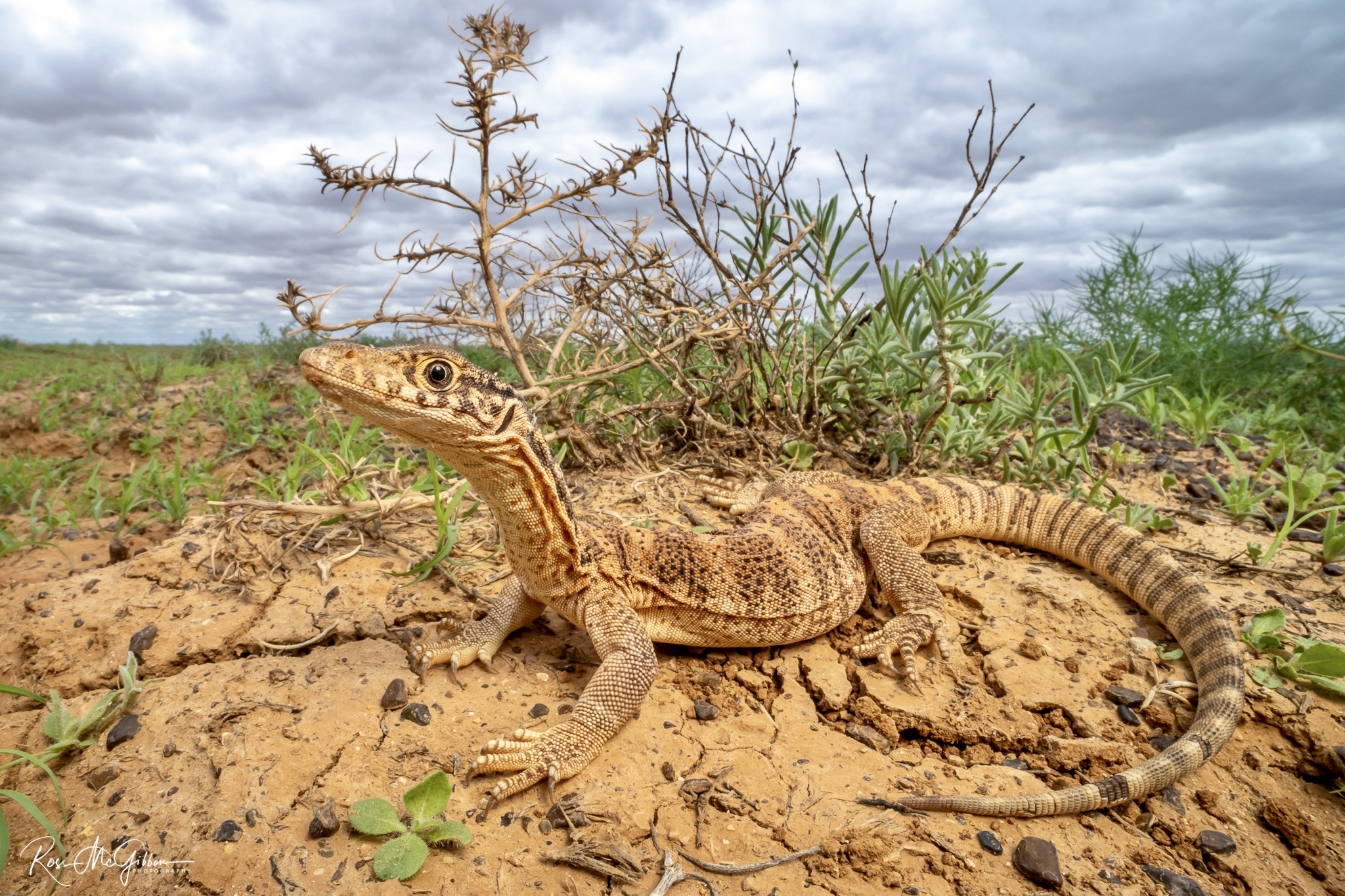
Below: The smallest of the five Spencer’s Monitors we encountered, photographed with a wide-angle lens to incorporate the surrounding landscape and weather conditions.
With only a few hours before dark and, in these mild conditions, our chances of finding any active diurnal snakes are almost nil. Besides, there's nothing in the blacksoil worth devoting an entire night to, so we punch north two hours back to the red soil to search for our second nocturnal target species, the Eastern Pygmy Mulga Snake (Pseudechis pailsei). It's late in the afternoon when we encounter a common Mulga Snake (Pseudechis australis) near Dajarra. It has us prematurely celebrating before we're positive it's just a common Mulga Snake, as both species look alike in this region and require close inspection.
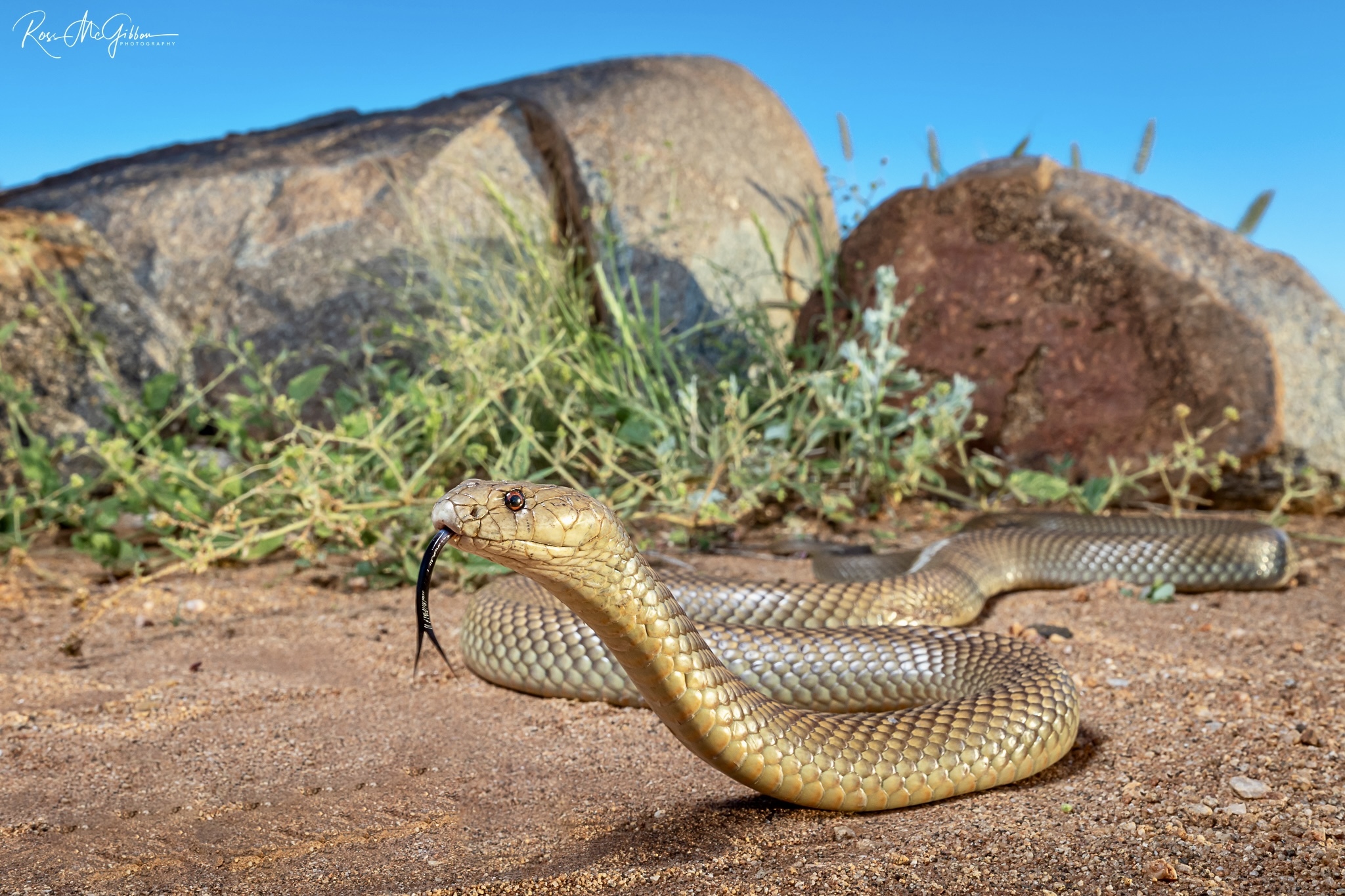
An adult Mulga Snake (Pseudechis australis) encountered late in the afternoon while searching for its close relative, the Eastern Pygmy Mulga Snake (Pseudechis pailsei).
Our brief moment of excitement is followed by another long and lifeless night cruising the roads. Aside from an amusing moment with a Children's Python that contorted itself into a tight ball when Richie removed it from the road, the night is an utter flop.
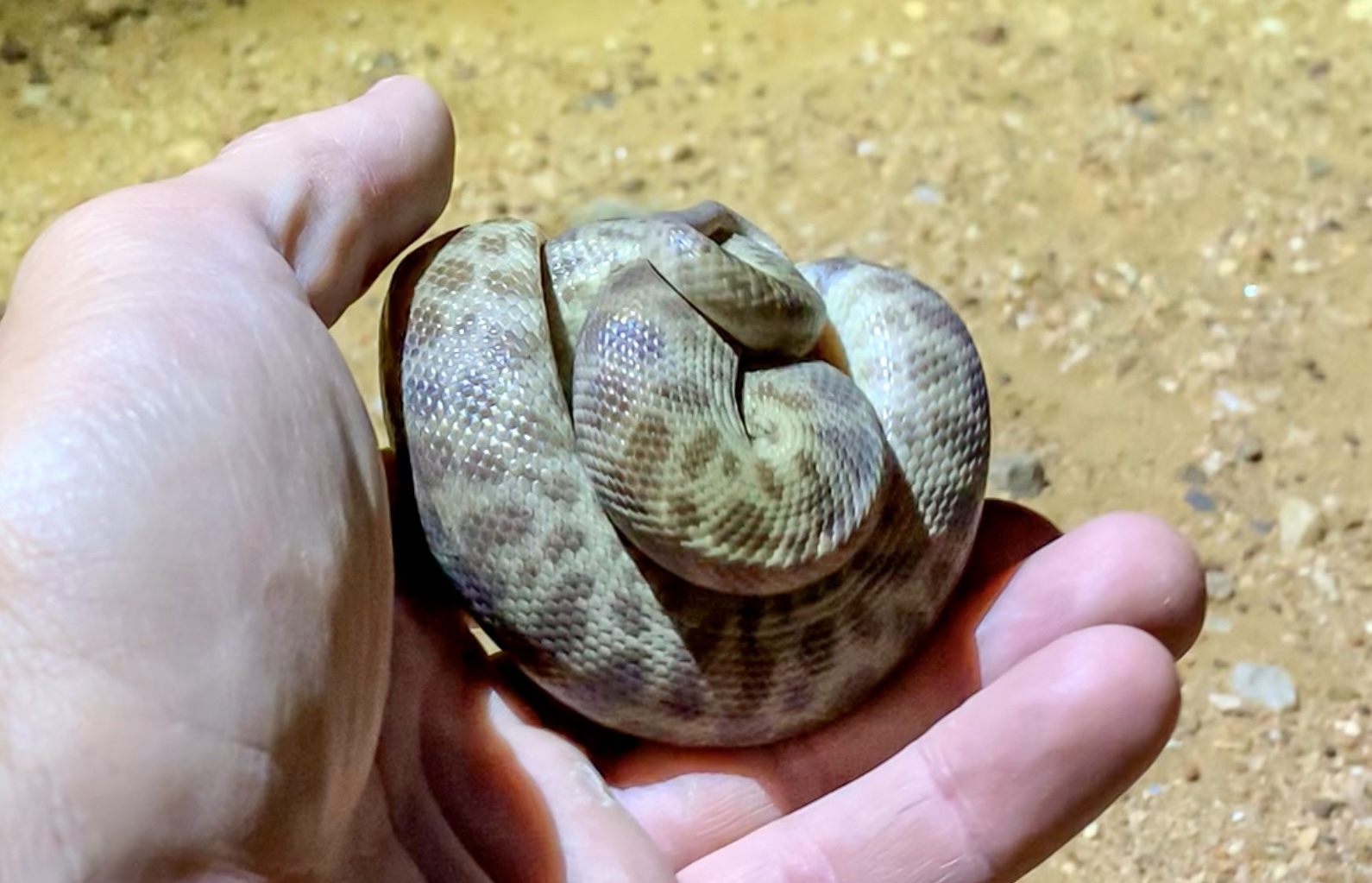
A Children’s Python (Antaresia childreni) contorted into a tight ball as a defensive response when disturbed.
Day number five sees us back in the blacksoil. This time, the skies are clear, and we feel optimistic about the warmer weather. With only today and tomorrow remaining, we are desperate to maximise our chances and resort to taking turns sitting up on the roof racks to get a better view while the other drives. We persist like this for a few hours, but the sun and discomfort get the better of us and we retreat to the front seats. It was worth a try.
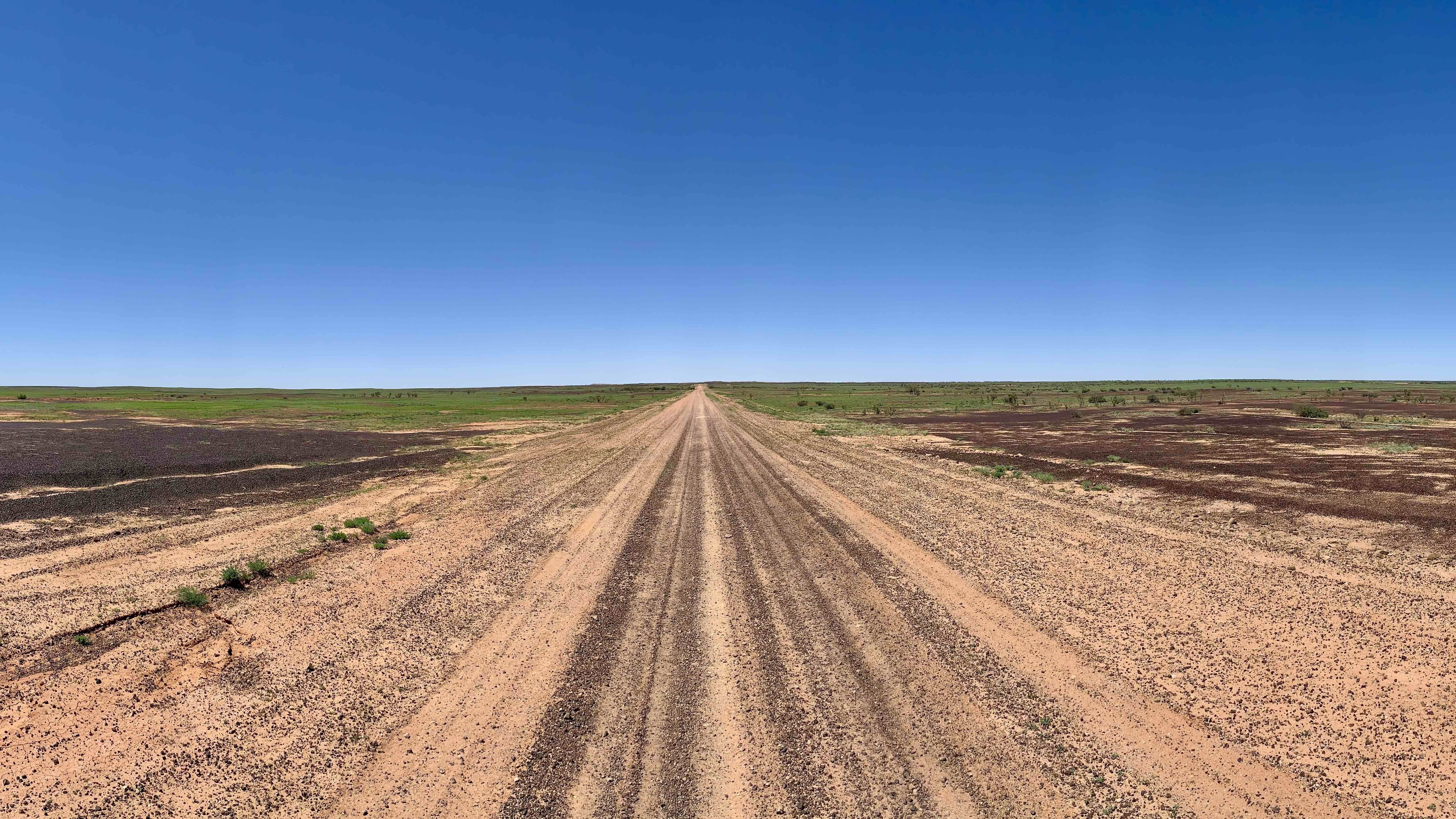
The long, straight roads cutting through the vast blacksoil plains are a defining feature of these trips. I relish the remoteness and scale of the country, but it can be unforgiving herping when conditions aren't on your side.
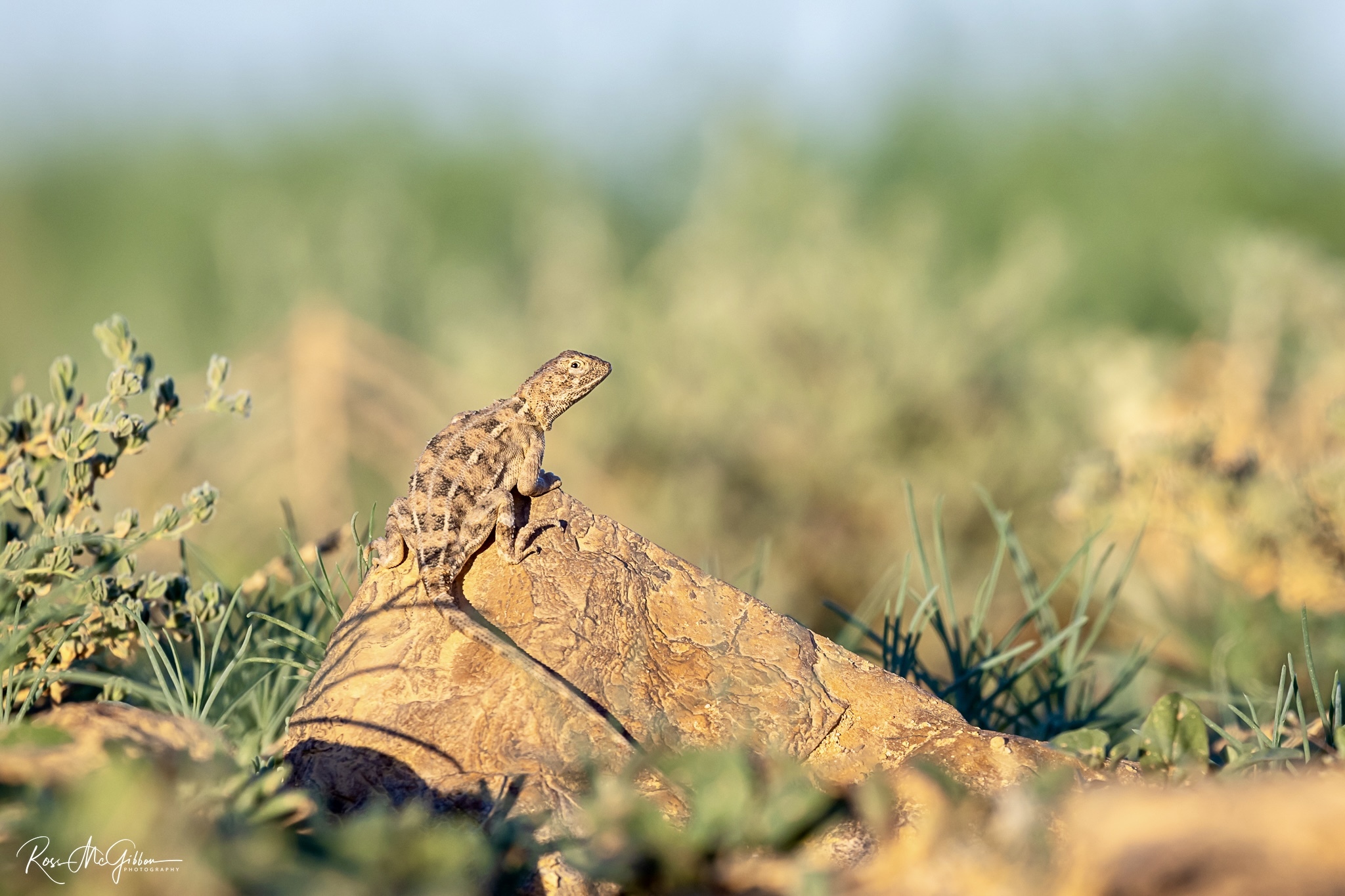
By mid-afternoon, we've seen nothing but lizards, a lonely Centralian Blue-tongue, an Inland Bearded Dragon and more Gibber and Eyrean Earless Dragons than we can count. I'm very fond of these charismatic little dragons, and I coax Richie into continually stopping for them so I can capture shots of the various objects they are utilising as basking sites, the most common being cowpats. There is no doubt that cattle grazing has damaged the native landscape. Still, like the Delma using cowpats for shelter, it's pleasing to see herpetofauna making use of them in some small way.
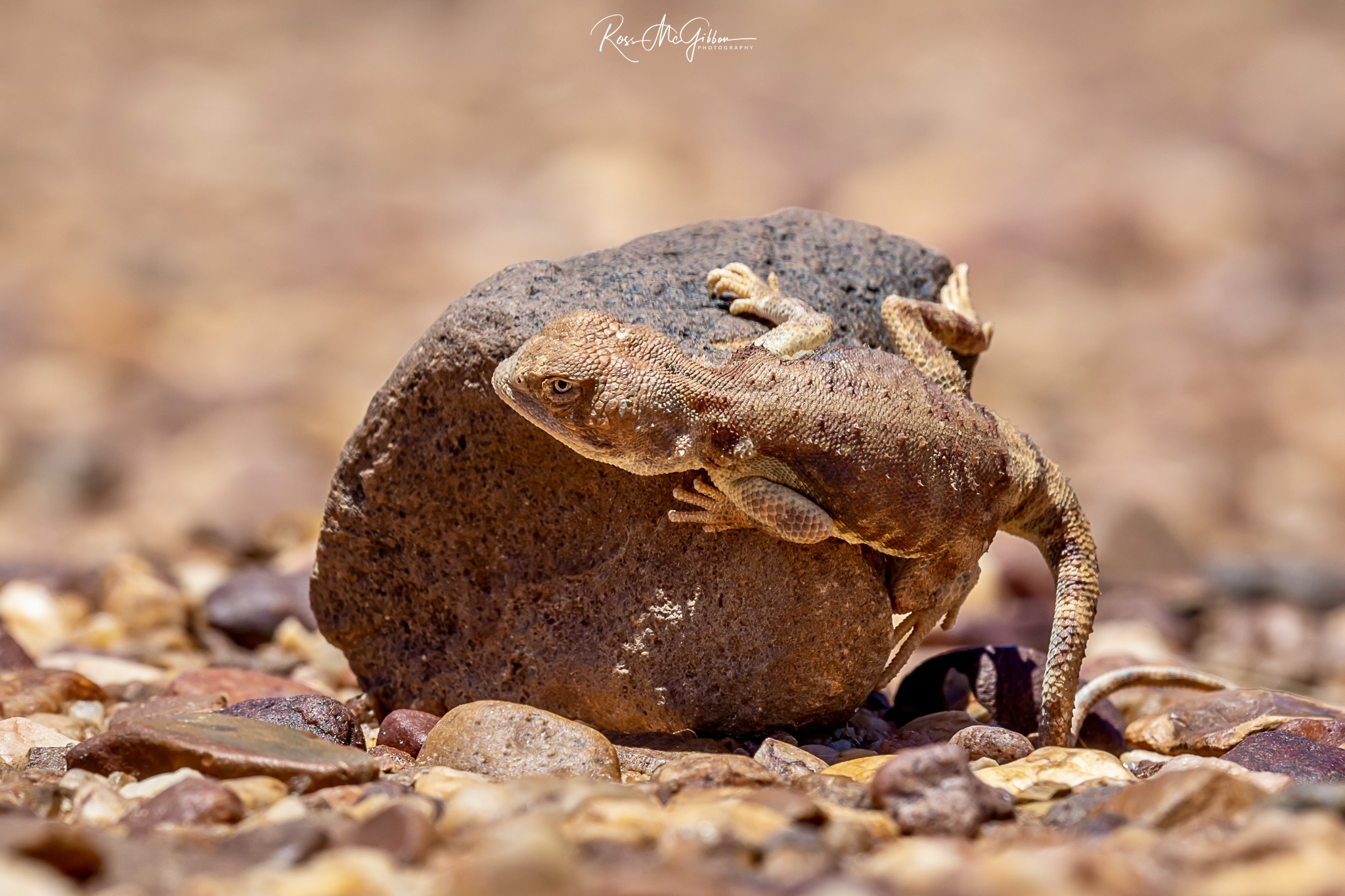
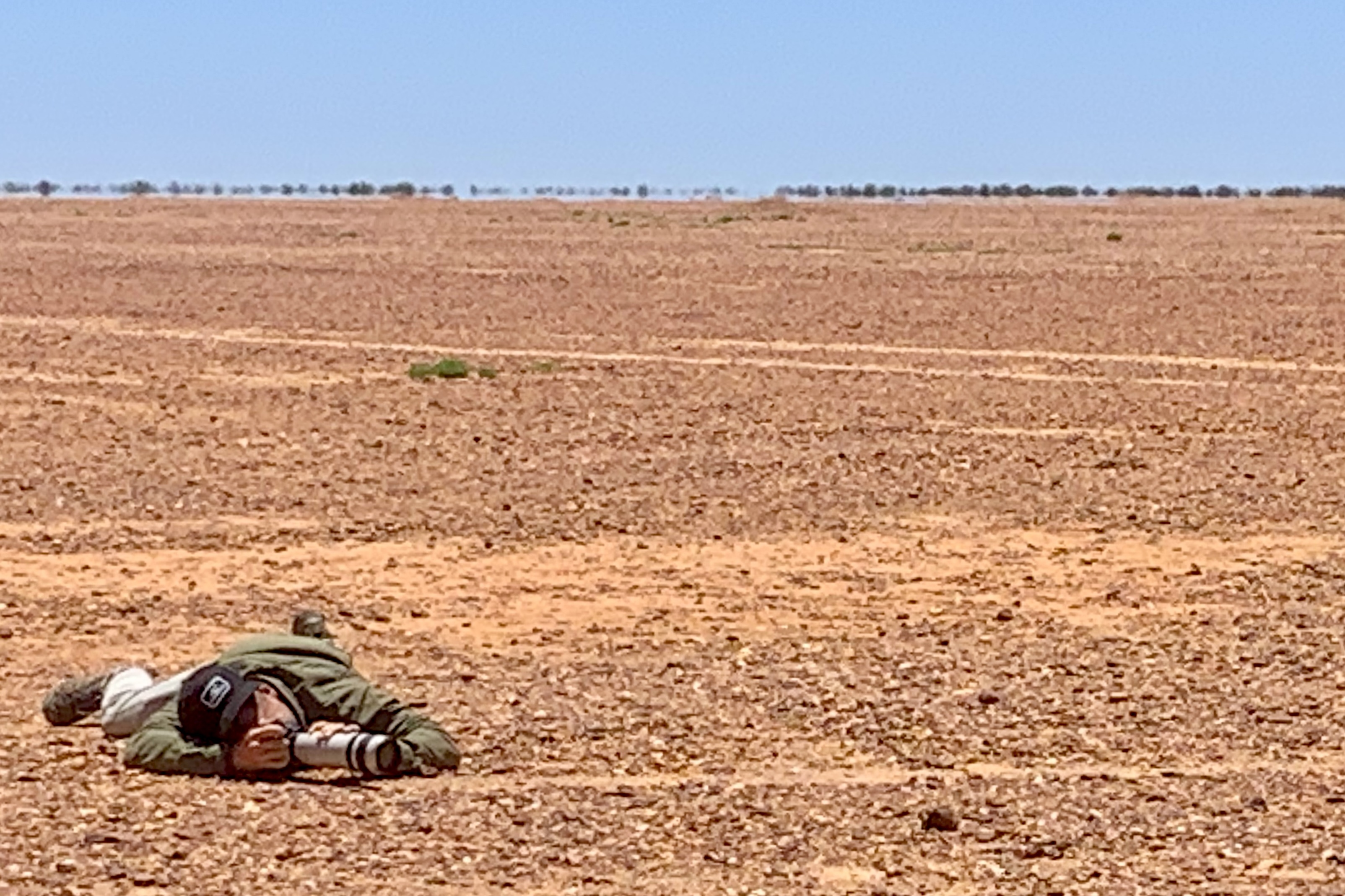
Above: A Gibber Earless Dragon (Tympanocryptis intima) doing its best to hide from me on the opposite side of a small rock.
Below: Me photographing the Gibber Earless Dragon.
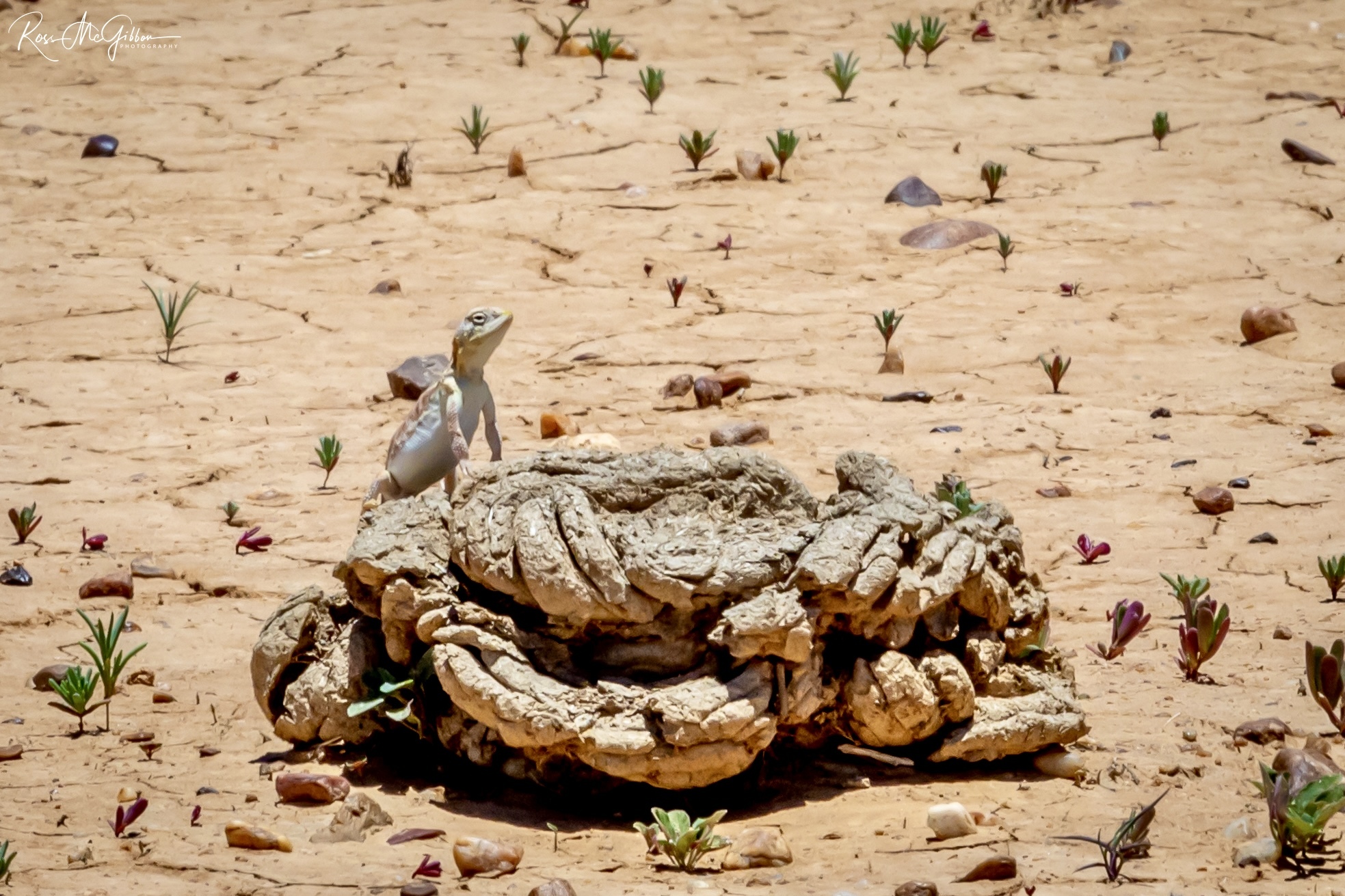
Above: A Gibber Earless Dragon (Tympanocryptis intima) utilising a cow pat as an elevated basking site.
Below: An Eyrean Earless Dragon (Tympanocryptis tetraporophora), the other species of earless dragon that proliferates in the region.
Nightfall arrives without a single snake to show for our efforts. We've clocked up nearly 4,000km in total, and after such a long day, neither Richie nor I can be bothered driving 150km back to the red soil to risk another dead night. A pailsei will have to keep for another time. It's also evident we've exhausted the 100km stretch of blacksoil we've been working over the last few days, and it's time to move on to a new location.
With only tomorrow left to locate an ingrami, we agree the best use of our last night is to map out the best-looking habitat for tomorrow. On account of the decent rains this season, the plains are alive with new growth, and most of the habitat looks appealing during the day. But there is one crucial thing we can't see during the day: rats. In particular, Long-haired Rats, the primary food source for ingrami. If we find them, we should increase our chances.
Not long after passing a creek with a reasonable amount of remnant water, we notice rats darting across the road. We even spot a few Kowaris, medium-sized carnivorous marsupials with prominent black brushes of hairs on the ends of their tails, a good find in this region for mammal enthusiasts. A steady flow of mammal activity continues for about 15km before the trail goes cold.
"That's our spot," I say to Richie.
We double back to find a place to camp and get a good night's sleep before D-day.
It's day six, our last day before heading home. I'm unsure if it was the new location or the mammal activity last night, but we feel genuinely optimistic this morning. Still, looking over the endless blacksoil plains, I concede that we're effectively looking for a needle in the world's largest haystack. I try not to dwell on the magnitude of our task or remind myself that if we don't find one today, all this time, money and effort spent in the blacksoil would be for nothing.
We spot some good, heavily cracked blacksoil and pull over not far from camp. About 30m from the road is a berm, a raised strip of soil formed by a grader that runs parallel to the road. It looks like the most likely place for a snake to bask, allowing it to angle itself towards the rising sun. We split up in opposite directions along the berm.
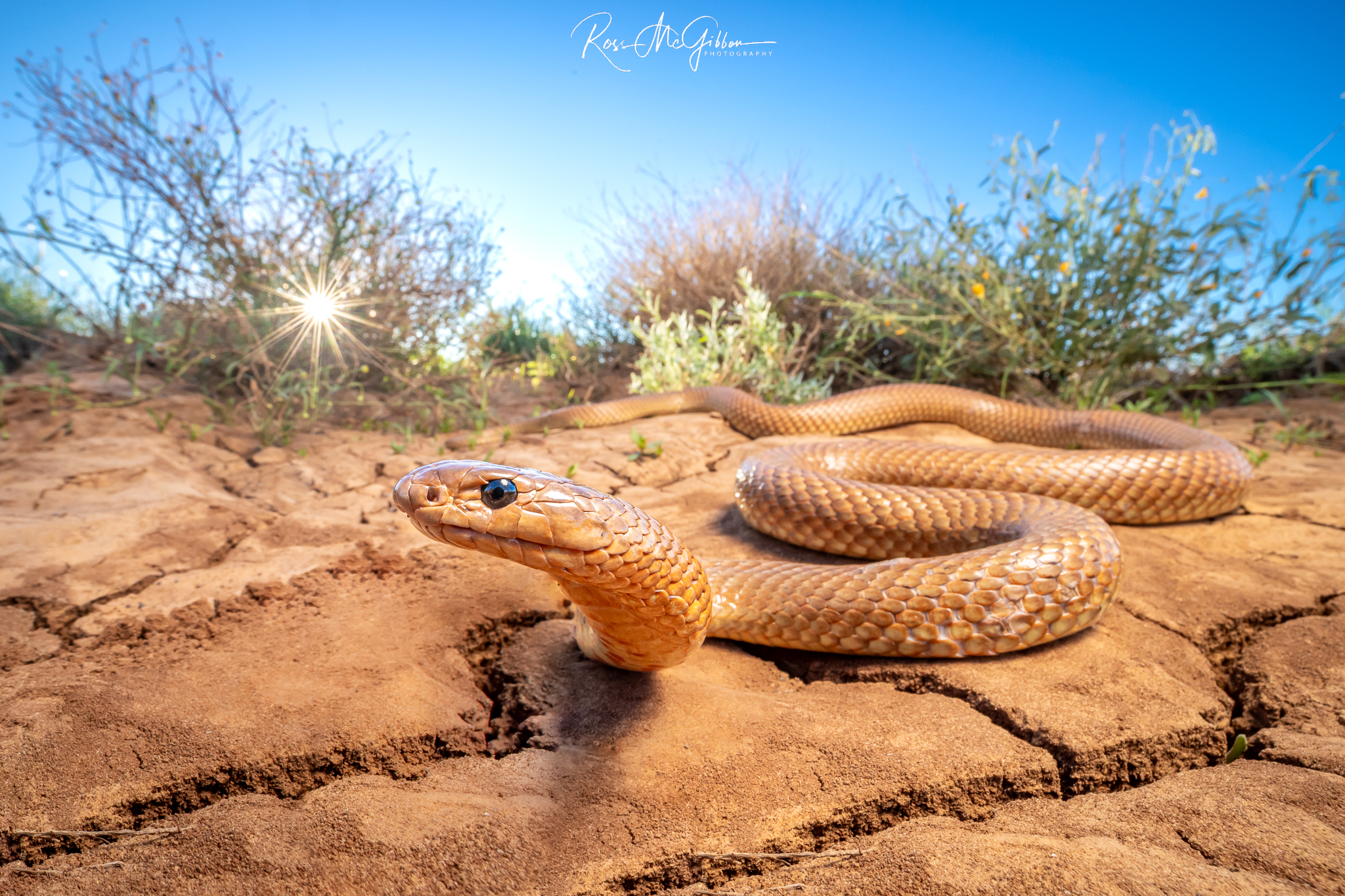
After just a few steps, I spot a snake lying only about two metres in front of me. I knew instantly what it was, but I was in complete and utter shock. After spending so much time scanning the blacksoil, searching as close and as far as we could see, I simply couldn't believe an Ingram's Brown Snake was lying there in plain sight.
There was very little cover on the exposed blacksoil, yet it hadn't bolted. In open country like this, most snakes would have disappeared long before we'd got close enough to notice them, but this one remained completely still, basking in the early morning sun. There, only a couple of metres away, was the species we'd driven thousands of kilometres to find, a beautiful 1.3m Ingram's Brown Snake, her pinkish-orange scales shimmering in the morning light.
At that moment of elation, what would ultimately be 6,500km, eight long days in the car and a considerable fuel bill suddenly seemed like a fair price to find and film this fascinating and seldomly encountered species. And, as if the discovery itself wasn't enough, this individual proved to be one of the most inoffensive and best-natured brown snakes we'd ever encountered.
But the significance of the moment went beyond simply finding an incredibly elusive snake. With the discovery of Pseudonaja ingrami, I had finally found all nine species in the genus. After years of searching across Australia, it seemed fitting that the hardest species to find would be the one I saved until last.