
Snakes Explained: Correcting Misinformation About Australian Snakes
By Ross McGibbon
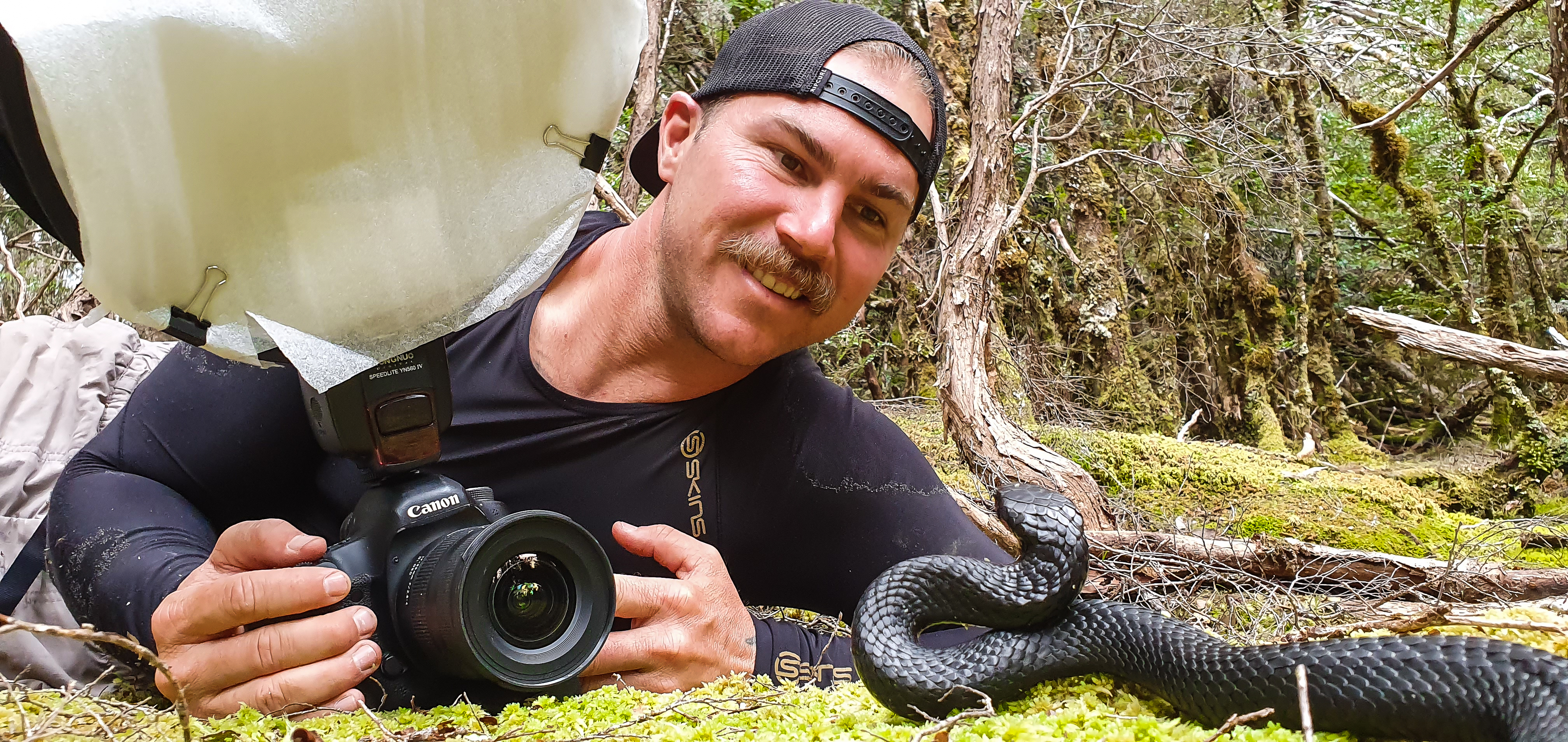
Photographing A beautiful Black Tiger Snake (Notechis scutatus) in the Tasmanian highlands, Australia (2019)
About the Author
The information provided on this page stems from a lifelong obsession with snakes, combined with my professional experience working with them as a snake catcher and wildlife photographer specialising in venomous snakes. I use my field photography to promote a better understanding of reptiles and educate the public about snake safety and awareness through my online platforms: (YouTube, Facebook, Instagram & Flickr).
In my spare time, I study reptiles and strive to stay up to date with new research and developments in herpetology, with a particular interest in venom and snakebite. I am also a full-time career firefighter with a strong focus on public safety. As part of my professional training, I am qualified in advanced first aid and have first-hand experience with snakebite treatment, both as a patient and as a first aider.
I have spent many years observing, photographing and working with Australian snakes. The time I spend photographing snakes in the field often involves extended close observation and interaction, providing unique insights into the behaviour of wild specimens. This amounts to hundreds of hours spent with these animals, alongside my experience as a snake catcher and my ongoing study of current scientific research. I draw on this combined experience to provide practical, evidence-based information about Australian snakes, their behaviour and snake safety.
SHORT FILM: DEADLY AUSTRALIAN SNAKES & THEIR BEHAVIOUR
DON’T MISS my educational film covering everything Australians should know about venomous snakes and their behaviour.
In this short film, you'll see fascinating footage of Australian venomous snakes and learn the truth about snakebites and animal-related fatalities in Australia. I'll break down the defensive behaviours of our venomous snakes, explain what these behaviours actually mean, and demonstrate how you should respond when you encounter one.
Watch the film and learn how to better understand and safely coexist with Australia's venomous snakes.
Frequently Asked Questions
Are Australian snakes the deadliest in the world?
When are Australian snakes most active?
Do Australian snakes hibernate during Winter?
Are snakes more aggressive during mating season?
What is a dry bite and how do they occur?
What should I do if I encounter a snake?
What if I live in a remote area and there are no licenced snake catchers around?
What should I do if a snake becomes defensive?
Are snakes deterred by vibrations?
Are Australian snakes territorial?
Do snakes protect their young or eggs?
If I see a baby snake, will there be a protective parent around?
Can you identify a non-venomous from its larger head size?
Is a King Brown a Brown Snake?
Am I protecting my family by killing snakes?
What action can I take to prevent snakes and keep my family and pets safe?
How can I protect my pets from snakes
What is Australian Snakebite first Aid
Are Australian snakes the deadliest in the world?
Australia is home to approximately 240 species and subspecies of snake, including its marine snakes. Of these, around 40 species are considered medically significant, meaning their venom is capable of causing potentially serious or life-threatening envenoming in humans. Less than 10 species have been responsible for recorded human fatalities.
That may sound daunting if you fear snakes, but it is important to put these numbers into perspective. While Australia has an extraordinary diversity of venomous snakes, the vast majority pose little or no threat to humans.
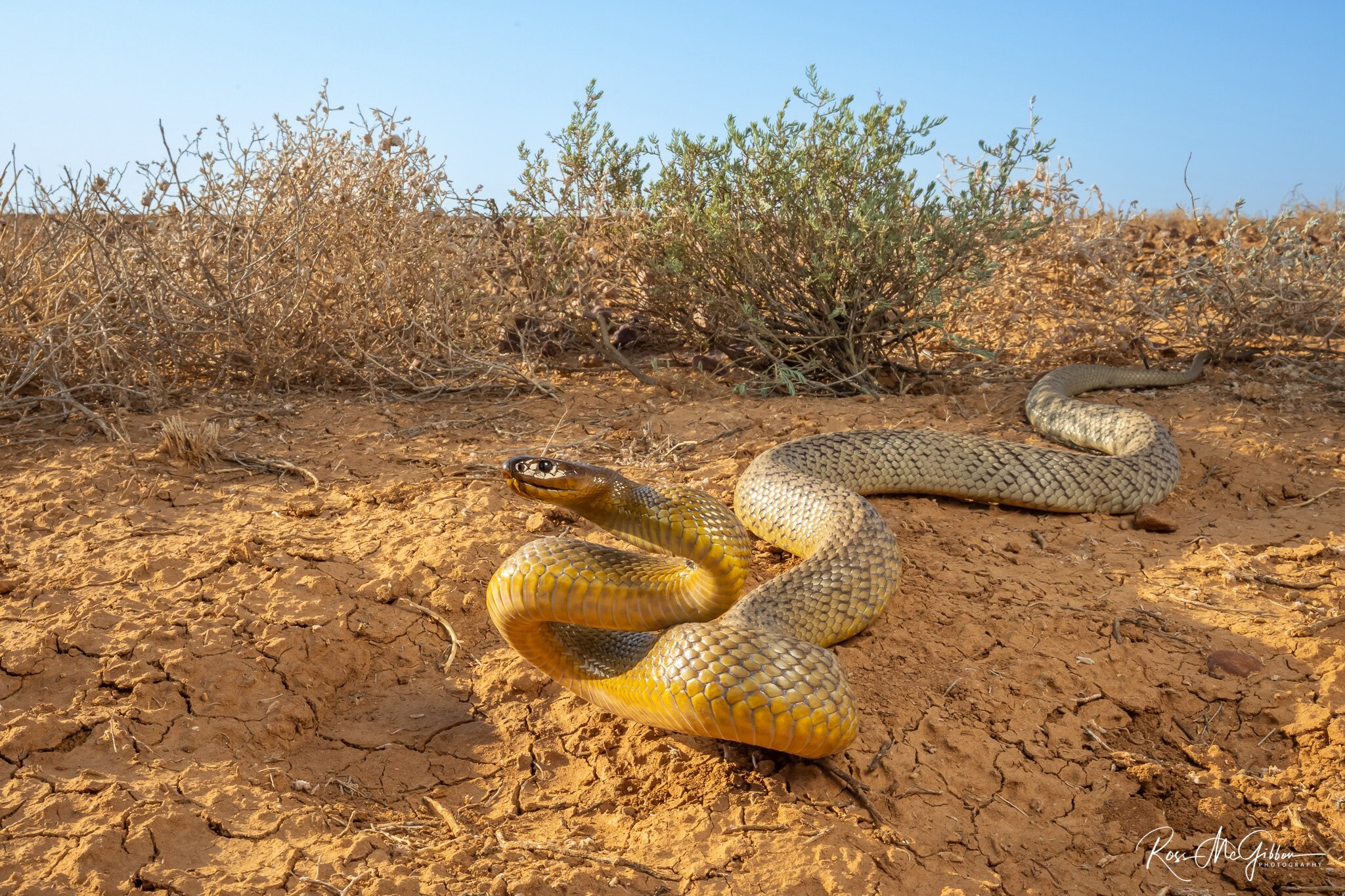
Many of Australia's highly venomous snakes became infamous in 1979 when a study comparing the toxicity of snake venoms found that several Australian species possessed some of the most potent venoms tested at the time. The study used the LD50 test, a laboratory measure of venom toxicity, and included a selection of Australian and overseas snake species.
The results were subsequently published and widely interpreted as a ranking of the world's "most venomous" snakes. Since then, the findings have been repeatedly misrepresented by the media, the public and snake enthusiasts, often with little regard for what the test actually measured.
How many times have you heard that Australia has "9 of the top 10 deadliest snakes in the world", or heard someone proudly proclaim that a particular snake is "the second most venomous snake in the world"?
The problem is that the LD50 test measures only one aspect of venom toxicity under specific laboratory conditions, and there are numerous limitations to using its results to determine how venomous, dangerous or deadly a snake is in the real world.
What does the LD50 test actually measure?
LD50 stands for median lethal dose. In simple terms, it is the amount of venom required to kill 50 per cent of a group of test animals under controlled laboratory conditions. The 1979 study used mice as the test subjects.
It was a scientific exercise designed to compare the toxicity of venoms, not to rank snakes according to how dangerous they are to humans.
There are several important limitations to using LD50 results as a basis for ranking snakes as the "most venomous", "deadly" or "dangerous" in the world:
The test was performed on mice, not humans.
Venom toxicity in mice does not necessarily translate directly to toxicity in humans. Different species can respond very differently to the same venom, and the effects of a venom in its natural prey can also differ from its effects in humans.
The test only measures toxicity, not the complete venomous bite.
A snake can have extremely potent venom but deliver only a relatively small quantity. Another species may have less toxic venom but be capable of delivering a much larger dose. Both toxicity and venom yield are important when considering the potential consequences of a bite.
Venom is adapted to a snake's natural prey.
Snake venoms are complex biological mixtures that have evolved to subdue particular prey. Testing every venom against the same laboratory animal therefore provides only one measure of relative toxicity. A result obtained using mice should not be interpreted as a universal measure of how effective that venom is against every species.
The study did not include every venomous snake in the world.
There are more than 600 recognised species of venomous snake globally, and the 1979 study tested only a selection. Many species were not included. Since then, numerous new species have been described and significant changes have been made to snake taxonomy and our understanding of venom composition and function.
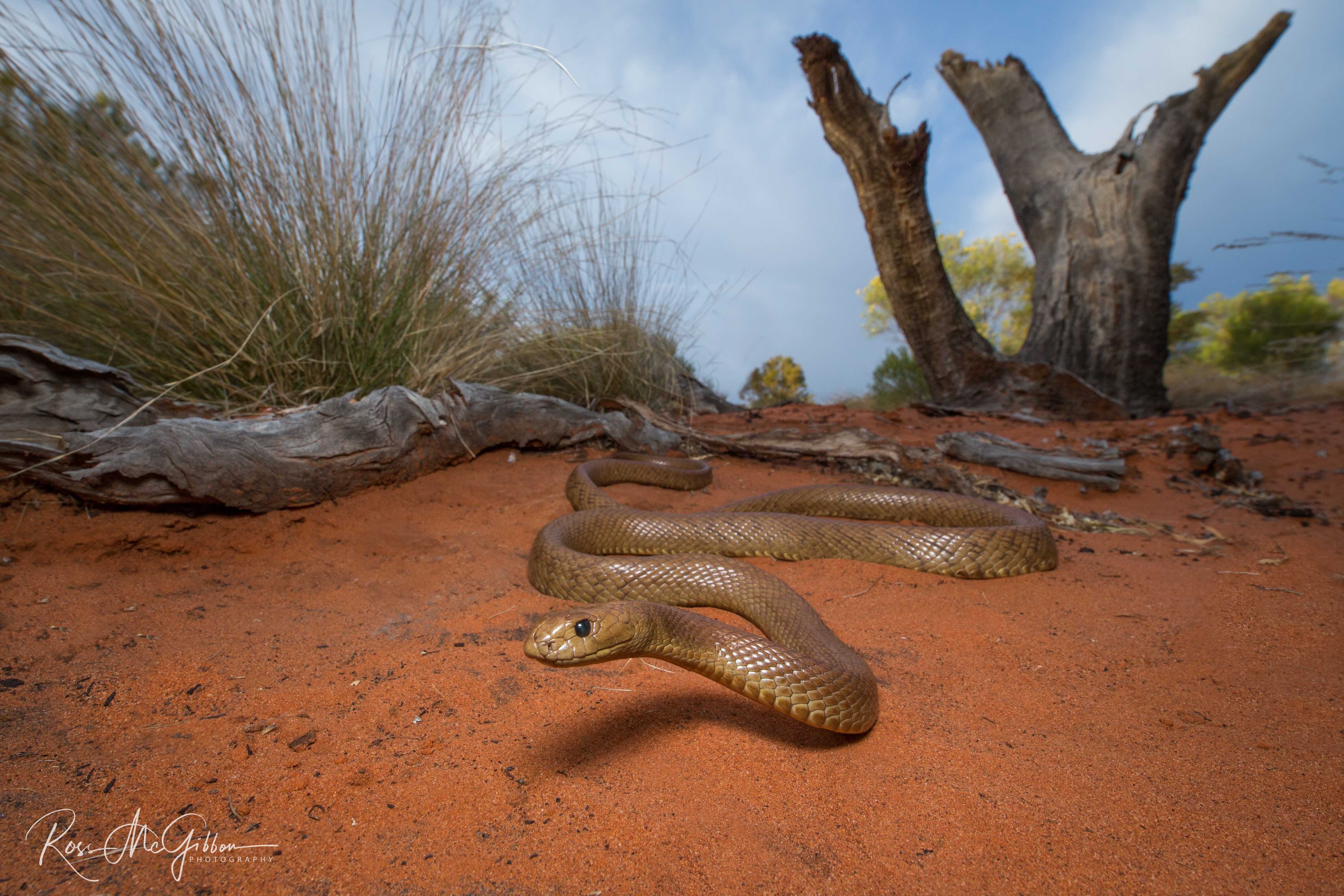
The test does not account for a snake's venom yield or ability to deliver that venom.
This is particularly important when comparing Australian species. For example, the Eastern Brown Snake (Pseudonaja textilis) has exceptionally potent venom, while the Coastal Taipan (Oxyuranus scutellatus) is capable of delivering a considerably larger quantity of venom. The potential outcome of an actual bite therefore cannot be predicted simply by looking at an LD50 value.
So what makes a snake dangerous?
There is no single measurement that can tell us which snake is the "most dangerous" in the world.
To assess the real-world risk posed by a particular species, we need to consider a range of factors, including:
- venom toxicity and composition
- venom yield
- fang size and venom-delivery capabilities
- how the venom affects humans
- the snake's size and behaviour
- its defensive behaviour when threatened
- its habitat and preferred prey
- how frequently it encounters people
- how frequently it bites
- how often bites result in significant envenoming
- the availability and effectiveness of medical treatment
- the number of human fatalities attributed to the species.
This is why venomous, medically significant, dangerous and deadly are not interchangeable terms.
A snake can possess extremely potent venom without being particularly dangerous to humans. The Inland Taipan (Oxyuranus microlepidotus) is an excellent example. It possesses exceptionally potent venom, yet it is a relatively shy species that inhabits remote areas and rarely encounters people. Consequently, bites are extremely uncommon.
Conversely, a snake with less potent venom can present a much greater risk if it is abundant, commonly encountered by people, defensive when threatened and responsible for a large number of bites.
What does "deadly" actually mean?
If we use the term deadly literally, we are talking about a snake's capacity to cause human deaths, rather than simply the toxicity of its venom.
Snakebite envenoming is a significant global health problem. The World Health Organization estimates that between 81,000 and 138,000 people die from snakebite envenoming every year, with the overwhelming majority of deaths occurring in Africa, Asia and Latin America.
India alone accounts for tens of thousands of snakebite deaths each year. By comparison, Australia records only a very small number of snakebite fatalities.
So while Australia is home to some extraordinarily venomous snakes, our snakes are certainly not the deadliest snakes in the world when measured by their impact on human life.
What about Australia's "most venomous" snakes?
This is where the terminology becomes important.
Australia genuinely does have an extraordinary concentration of highly venomous snakes. Several Australian species have venom that ranks among the most potent ever tested in laboratory studies.
That is a fascinating fact in its own right.
The mistake is taking a measure of venom toxicity and turning it into a measure of danger to humans.
Consider the difference between these three questions:
Which snake has the most toxic venom?
This can be investigated using laboratory measures such as LD50, although the results depend on the test methodology, test animal and venom sample.
Which snake is the most dangerous to humans?
This requires consideration of behaviour, distribution, human encounters, bite frequency, venom delivery, envenoming and access to treatment.
Which snake is the deadliest?
This relates to the number of human deaths attributable to that species.
These are three very different questions, and they can produce three very different answers.
So, are Australian snakes the deadliest or most dangerous in the world?
Not by a long shot.
Australia has more than its fair share of highly venomous snakes, and we should certainly respect them. But the idea that Australia is crawling with snakes that are constantly waiting to kill people is a sensationalised myth.
Our snakes generally want nothing to do with us. Most would much rather escape than bite, and a snake bite requires a series of circumstances to occur before it becomes a medical emergency: a person must encounter the snake, the snake must bite, the bite must result in venom injection, and sufficient venom must be delivered to cause significant envenoming.
Australia records hundreds of snakebite presentations each year, but only a relatively small proportion require antivenom, and fatalities are fortunately rare.
Put that into the context of countries such as India, where tens of thousands of people die from snakebite each year, and the answer becomes pretty clear.
Australia may have some of the world's most venomous snakes, but that does not make them the world's deadliest.
When are Australian snakes most active?
The activity of a snake is strongly influenced by its ability to regulate its body temperature. As ectothermic animals, snakes rely primarily on external sources of heat to warm their bodies, using behaviours such as basking in the sun, moving between warm and cool areas, and selecting sheltered locations to maintain a suitable body temperature.
Temperature therefore has a major influence on almost every aspect of a snake's life, including hunting, digestion, movement, reproduction and immune function. As temperatures change throughout the year, so does snake activity.
For most Australian snakes, activity generally increases during the warmer months and decreases during the cooler months. However, this varies considerably between species and regions. In tropical northern Australia, for example, seasonal activity is influenced not only by temperature but also by rainfall, humidity and the availability of prey.
In southern Australia, spring is often when snake activity becomes particularly noticeable. As temperatures rise and snakes emerge from their cooler-season refuges, they begin spending more time basking, hunting, moving between habitats and searching for mates.
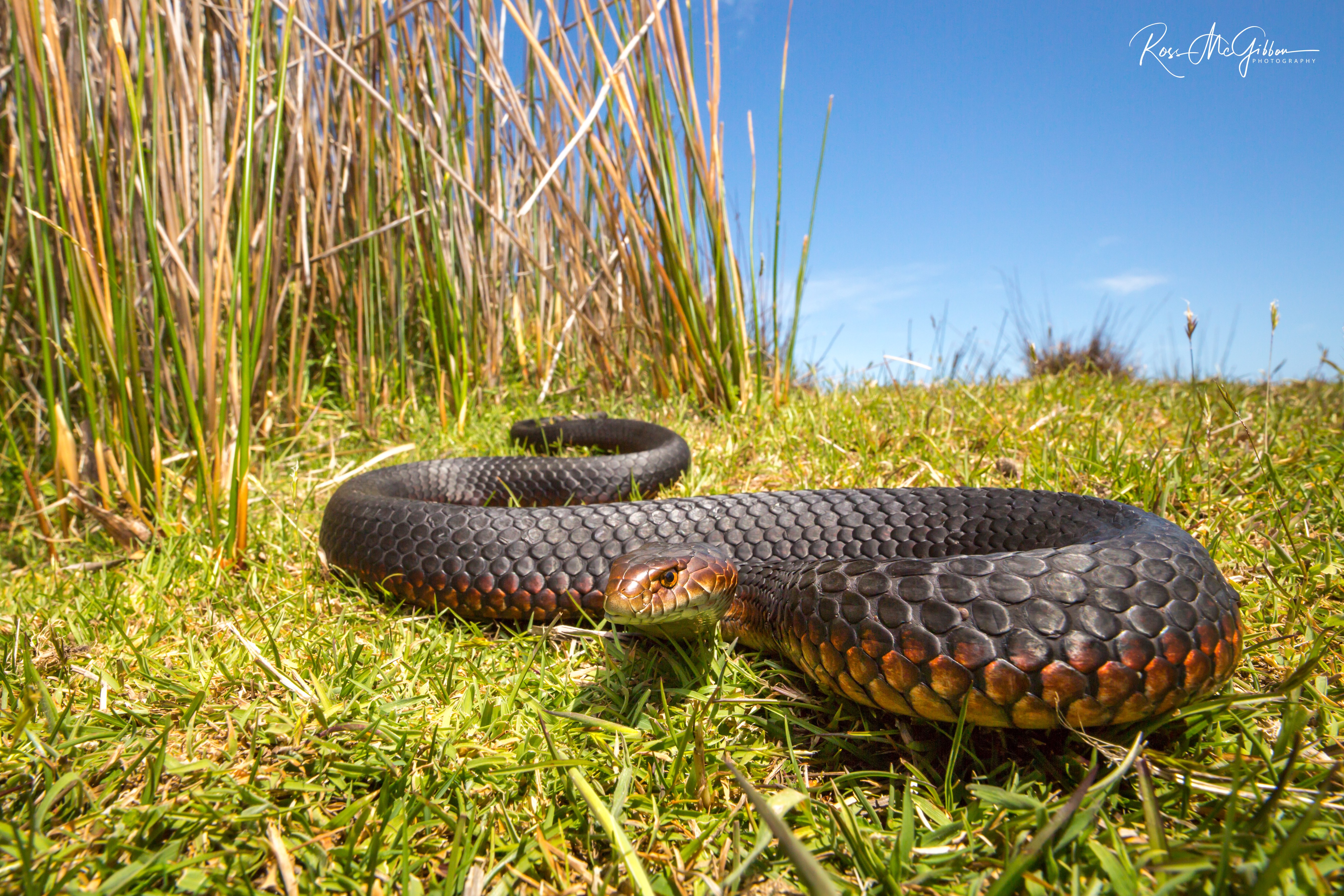
Spring is also an important breeding period for many Australian snake species. Male snakes may travel considerable distances in search of receptive females, while in some species males compete with one another for access to mates through ritualised combat. Females may also increase their feeding activity to build the energy reserves required for reproduction and, depending on the species, the development of eggs or young.
These combined factors can make snakes considerably more visible during spring and summer. However, it is important to remember that snake activity is not governed by the calendar alone. A warm spell during winter can bring snakes out of their shelters, while unusually cool weather can reduce activity during summer.
Rainfall can also have a major influence. In some parts of Australia, periods of rain can increase prey availability and trigger increased activity, while in other environments extreme heat or drought can have the opposite effect.
This is why there is no single "snake season" that applies across Australia. The timing and level of activity varies between species, location and weather conditions.
For people living in areas where snakes occur, the warmer months are generally the time to be most alert to snake encounters. Keeping grass and vegetation around frequently used areas under control, avoiding unnecessary contact with snakes and knowing what to do in the event of a bite are sensible precautions.
The good news is that increased snake activity does not mean snakes are actively looking for people. In most cases, a snake would much rather avoid you than confront you. Most bites occur when a snake is deliberately approached, handled, accidentally stepped on or otherwise feels threatened.
Do Australian snakes hibernate or brumate during Winter?
Yes, many Australian snakes become less active during winter, but the degree of dormancy varies considerably between species, location and weather conditions.
You will often hear the term brumation used to describe winter dormancy in reptiles. The term was coined in 1965 by American herpetologist Wilbur W. Mayhew to distinguish reptile winter dormancy from the hibernation observed in mammals.
The distinction is useful, although the terminology is not as clear-cut as it is sometimes made out to be. "Brumation" is widely used by herpetologists and reptile keepers, but there is no fundamental requirement for reptiles to have a separate term for winter dormancy. Hibernation simply describes a period of reduced activity and metabolism during winter.
For the purposes of this website, I generally use brumation when referring to winter dormancy in reptiles, as it is the term most commonly used within the reptile community.
So, do Australian snakes brumate during winter?
Many do, but not all, and not to the same extent.
Australia is an enormous continent with an extraordinary range of climates. Winter in Tasmania is very different from winter in tropical North Queensland, and the behaviour of snakes reflects these differences.
In cooler parts of Australia, many species significantly reduce their activity during winter. They may retreat into sheltered locations such as rock crevices, burrows, fallen timber or other refuges. However, they do not necessarily remain completely inactive. During suitable weather, some snakes will emerge to bask and may even move around, hunt or drink.
Species that are naturally tolerant of cooler temperatures can remain active whenever conditions allow. Tiger Snakes (Notechis scutatus), for example, are relatively cold-tolerant and can sometimes be encountered during winter, particularly on warm, sunny days.
The situation is different in tropical northern Australia, where winter temperatures can remain warm enough for snakes to stay active throughout the year. Some species also have breeding cycles that make winter an important period of activity.
The Coastal Taipan (Oxyuranus scutellatus) is a good example. In parts of northern Australia, males can become particularly active during the cooler months as they search for females. Rather than entering prolonged dormancy, they may spend considerable time travelling in search of reproductive opportunities.
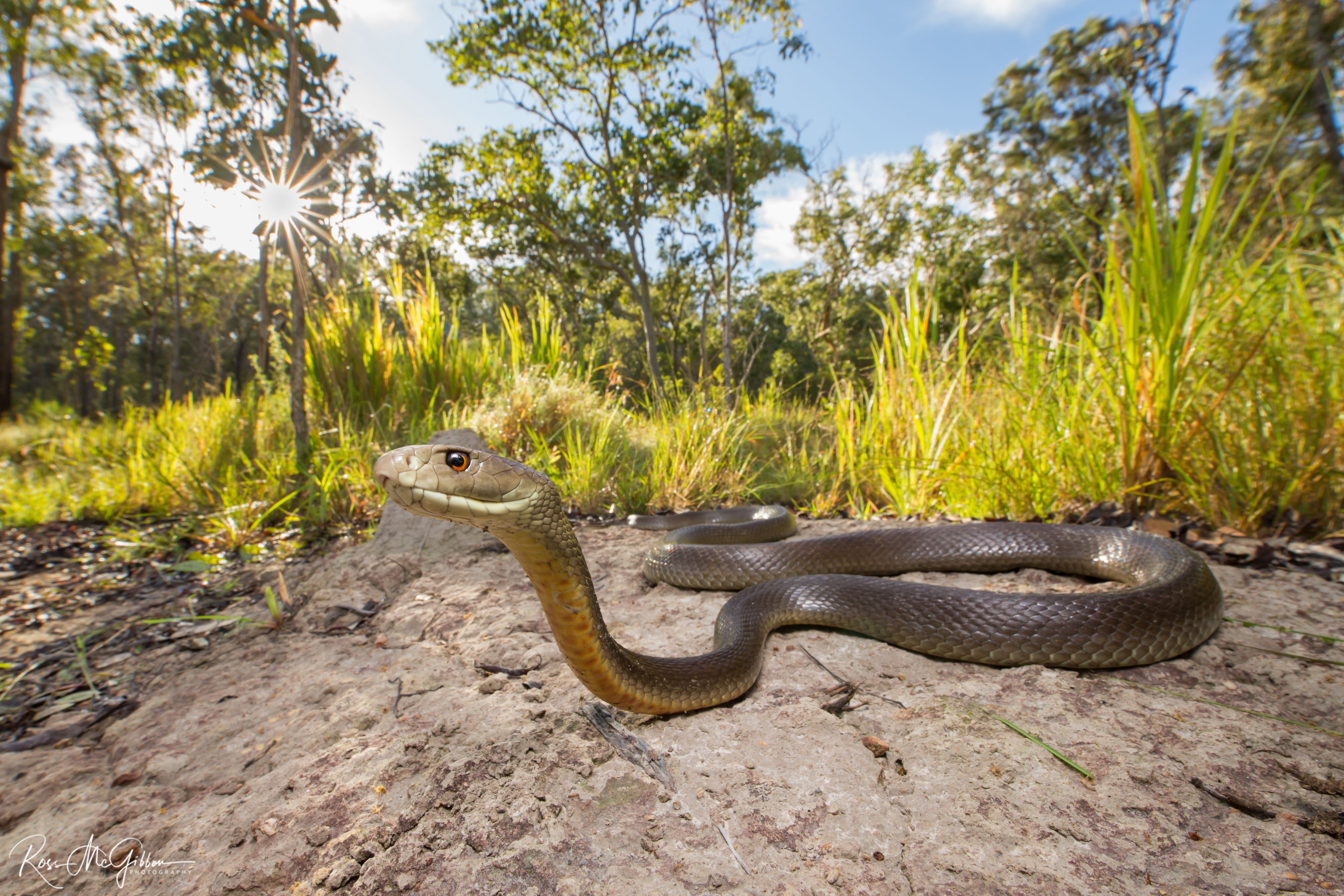
Coastal Taipan (Oxyuranus scutellatus) Mount Molloy, North Queensland
This highlights an important point: there is no single Australian "snake season".
Snake activity is influenced by temperature, rainfall, habitat, prey availability and reproductive cycles, all of which vary enormously across Australia.
Even where snakes normally become much less active during winter, an unusually warm day can bring them out of their refuges to bask. Conversely, prolonged cold weather can keep them sheltered for much longer.
So, if you live in an area where snakes occur, don't assume that winter means you cannot encounter one. The likelihood of seeing a snake may be considerably lower than during the warmer months, but snakes can still be active whenever conditions are favourable.
The safest approach is to remain aware of your surroundings year-round rather than relying on the calendar to determine when snakes are active.
Are snakes more aggressive during mating season?
No. There is no evidence that snakes generally become more aggressive towards humans during the mating season.
During the breeding season, males of some species engage in male-male combat, competing for access to receptive females. The behaviour can look quite dramatic, with two males intertwining and pushing against one another, and is sometimes mistakenly interpreted as mating. These contests are generally ritualised and rarely result in serious injury. The losing male eventually retreats, leaving the other with greater access to the female.
While this behaviour can be described as aggressive towards a rival, it should not be confused with aggression towards humans.
So why do people often believe snakes are more aggressive during mating season?
The answer is largely increased activity and increased encounters.
Following periods of reduced activity during the cooler months, snake activity generally increases as temperatures rise. Spring and summer are important periods for feeding, movement and reproduction, and males in particular may travel considerable distances in search of females. Some species locate potential mates by following chemical scent trails.
This increased movement can bring snakes into places where they are more likely to encounter people and pets. A snake following the scent of a potential mate, for example, may inadvertently travel through a suburban backyard, shed or other area frequented by people.
When a snake suddenly encounters a person or pet at close range, it may respond defensively. This can include freezing, fleeing, striking or, in some species, displaying defensive postures. The behaviour is not necessarily a sign that the snake is unusually aggressive because it is mating season. It is simply responding to a perceived threat, much as it would at any other time of year.
In other words, the increase in snake encounters during the breeding season can create the impression that snakes are more aggressive, when in reality we are simply seeing more of them and therefore having more opportunities for conflict.
The best way to avoid a confrontation is to give any snake plenty of space and allow it an opportunity to move away.
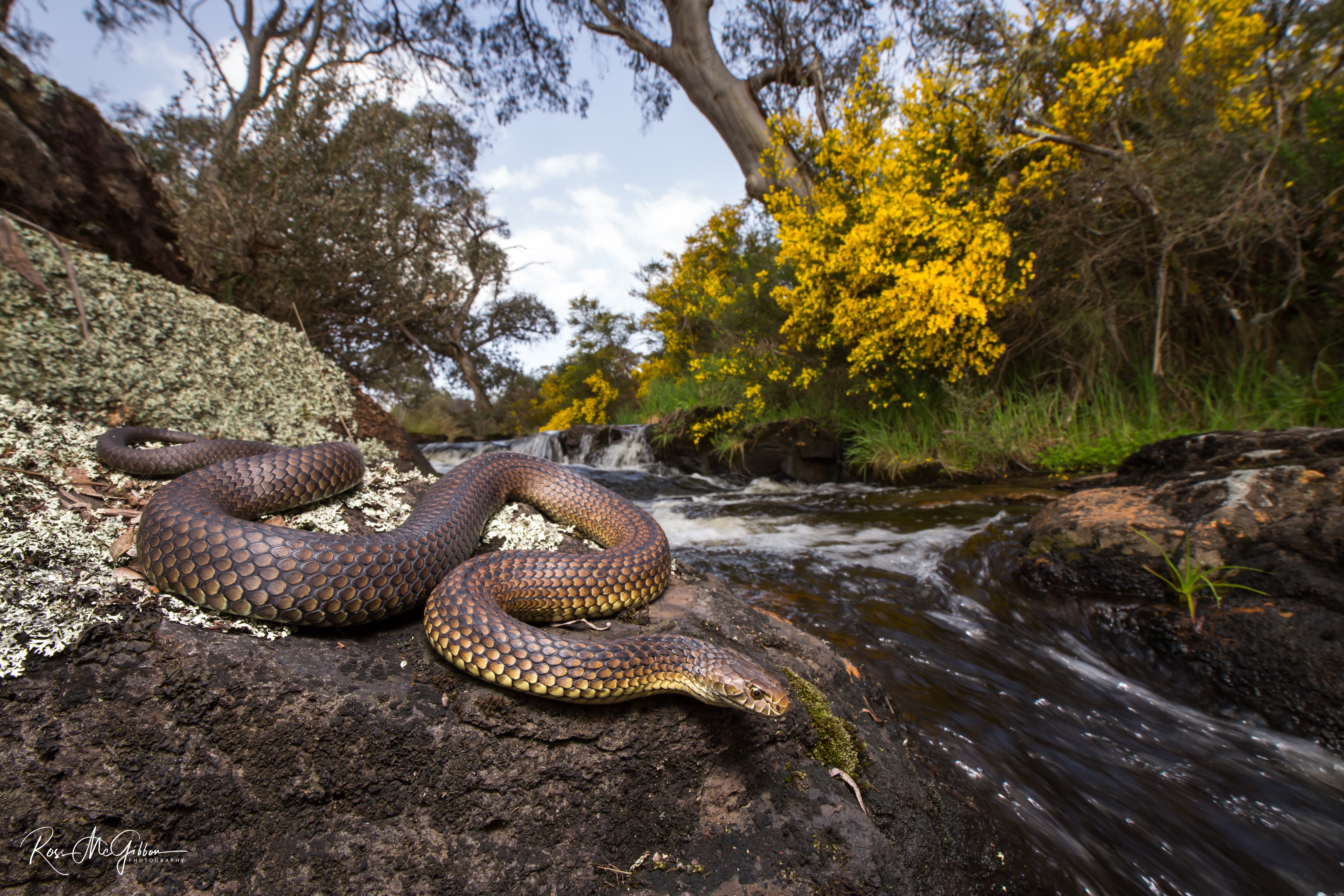
Are snakes aggressive?
In general, no. Snakes are not aggressive animals. Most species are shy and reclusive, preferring to avoid confrontation with humans and other animals whenever possible.
Snakes are more accurately described as defensive. When they feel threatened, they may respond with behaviours such as fleeing, freezing, hissing, inflating the body, striking or adopting a defensive posture. These behaviours are intended to deter a perceived threat and create an opportunity for the snake to escape.
A snake that strikes at a person is therefore not necessarily trying to attack them. It is usually responding defensively because it feels threatened, cornered or unable to escape.
There are exceptions, and individual species can differ considerably in their temperament and defensive behaviour. However, the idea that snakes actively seek out people to attack them is largely a myth.
Read on to learn more about defensive behaviour in snakes.
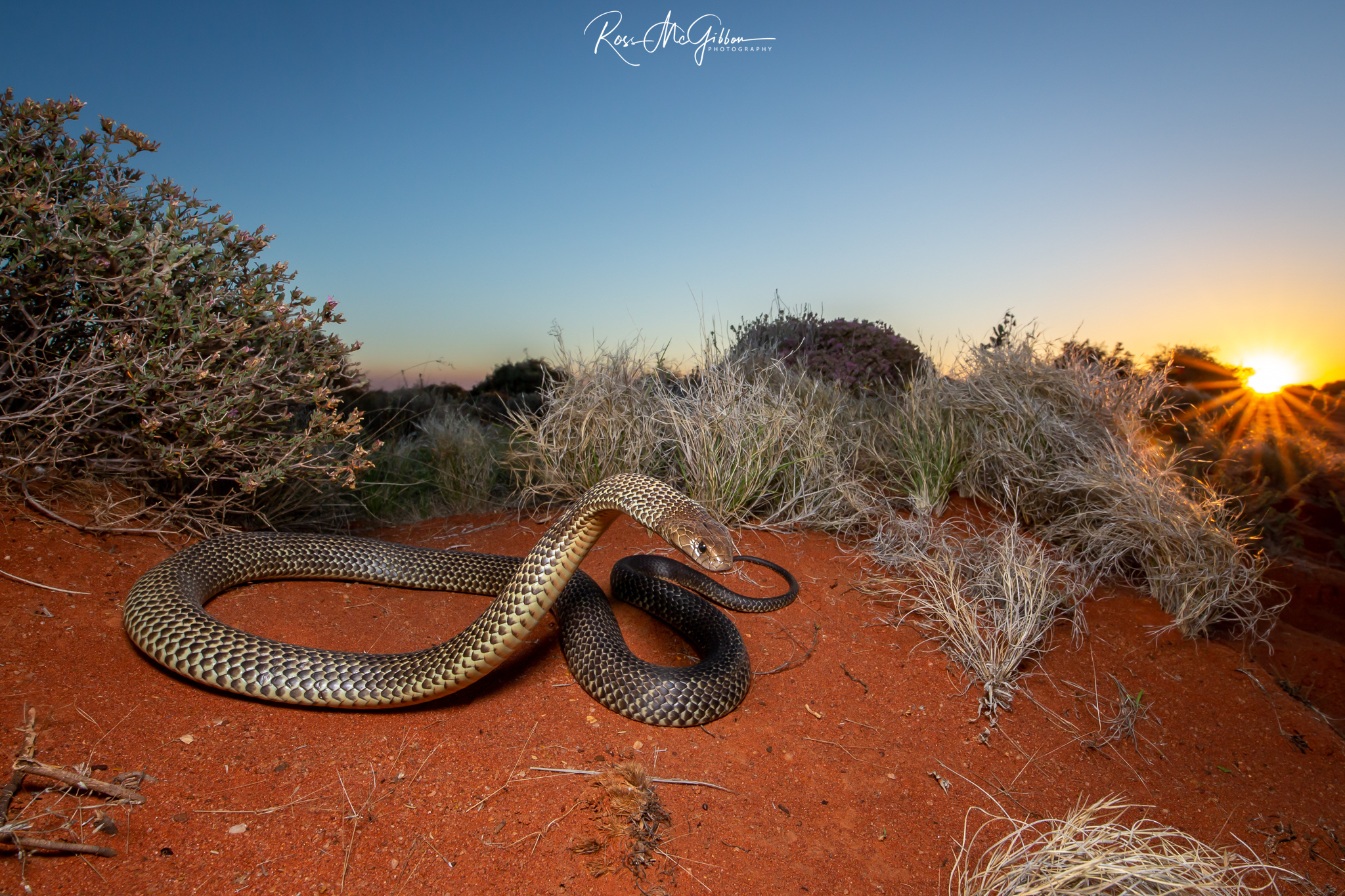
What is Defensive Behaviour
When a snake suddenly encounters a much larger animal, such as a human or domestic pet, it may perceive the encounter as a threat. Its response will depend on the species, circumstances and available escape options, but broadly speaking, snakes may respond through crypsis, flight or defensive confrontation.
These are all forms of anti-predator behaviour designed to avoid injury or death
Crypsis
Crypsis comes from the Greek word kryptos, meaning hidden or concealed. It refers to an animal's ability to avoid detection by blending into its surroundings through its colour, pattern, shape or behaviour.
For a snake, crypsis can be as simple as remaining completely still when a potential predator is nearby. If the snake is not detected, there is no need for a confrontation.
Flight
Flight, or fleeing, is probably the most straightforward defensive response. When disturbed, a snake will generally attempt to reach the nearest suitable cover or escape route.
Fleeing avoids the risks associated with confrontation and is therefore the preferred response for many snakes.
Sometimes this is as simple as disappearing into nearby vegetation, a burrow or a hole. However, if a snake is encountered while crossing open ground, such as a lawn, the safest available cover may be on the other side of the person who has disturbed it.
This can give the impression that the snake is deliberately moving towards, or even "chasing", the person. In reality, it may simply be trying to reach safety and the person happens to be in the way.
Defensive confrontation
If a snake feels threatened and cannot immediately escape, it may adopt a defensive display designed to discourage the perceived predator from approaching further.
Depending on the species and circumstances, this may include:
- rearing the forebody
- flattening the neck or body
- gaping the mouth
- thrashing or writhing
- mock strikes or lunges
- head-butting
- advancing towards the perceived threat
- biting or 'dry' biting
These behaviours can look remarkably aggressive to a human observer, but they are defensive responses intended to deter a perceived threat, not to deliberately attack or inflict harm.
Rearing
Snakes are low to the ground and can appear relatively small compared with a potential predator. By raising the front portion of the body, a snake can increase its apparent size and present a more imposing display.
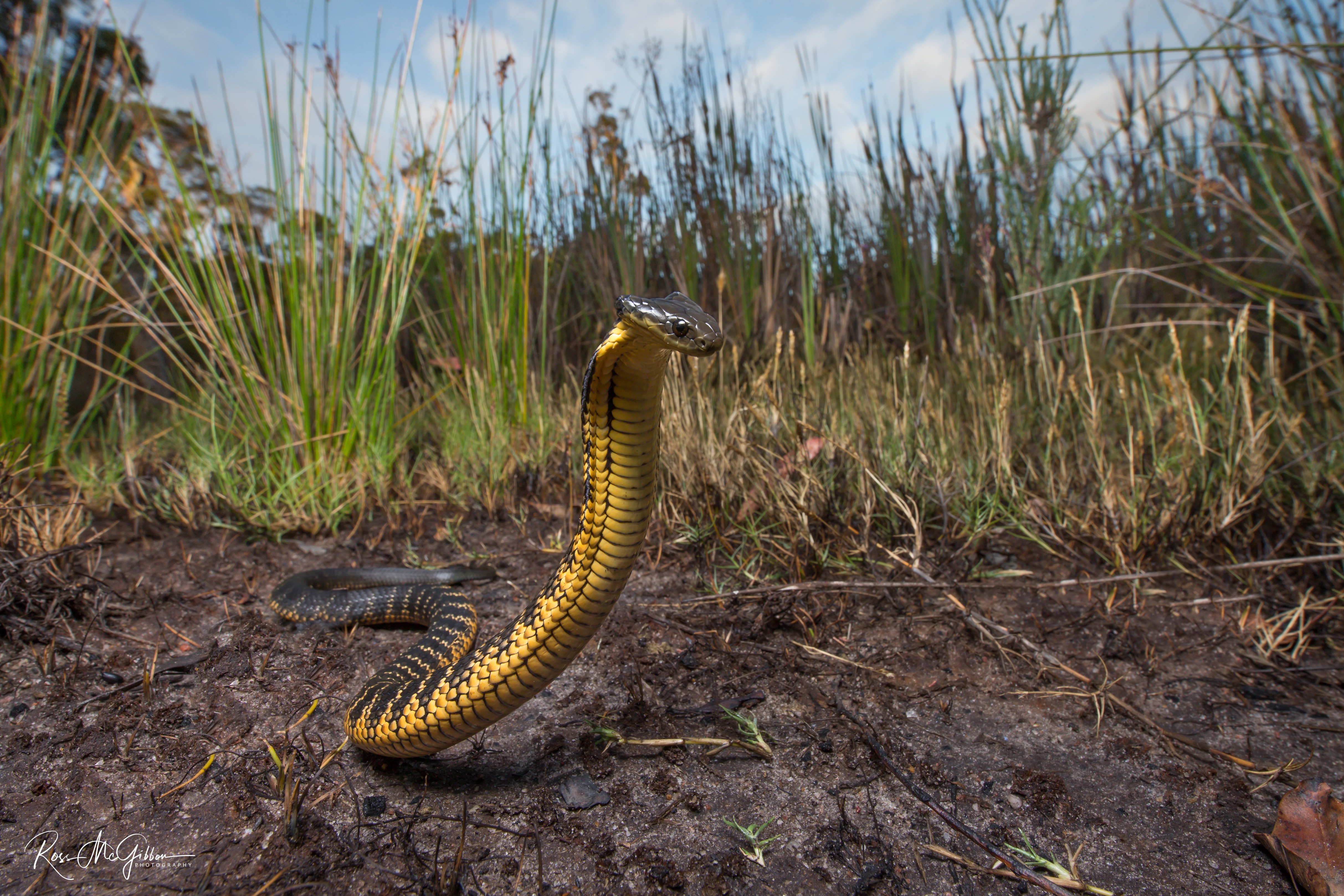
Tiger Snake (Notechis scutatus) performing rearing, Rocky Gully, Western Australia
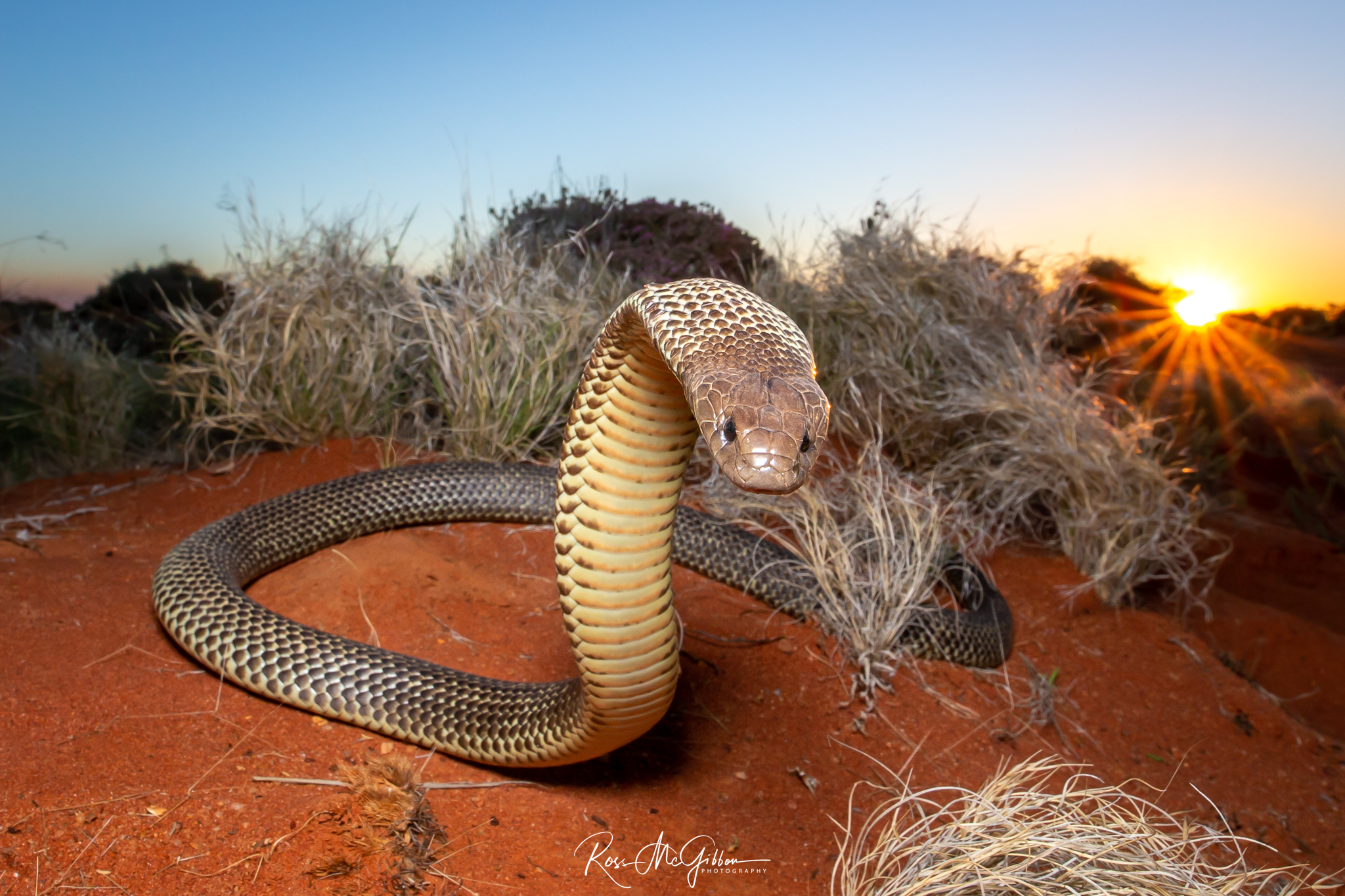
Neck flattening
Flattening the neck or anterior portion of the body makes a snake appear broader and larger. Cobras are famous for this behaviour, but several Australian species also display it, including Tiger Snakes, Red-bellied Black Snakes and Mulga Snakes.
Neck flattening can occur while the snake is upright or while it remains close to the ground. The latter is sometimes referred to as a side-angle defensive display.
Mouth gaping
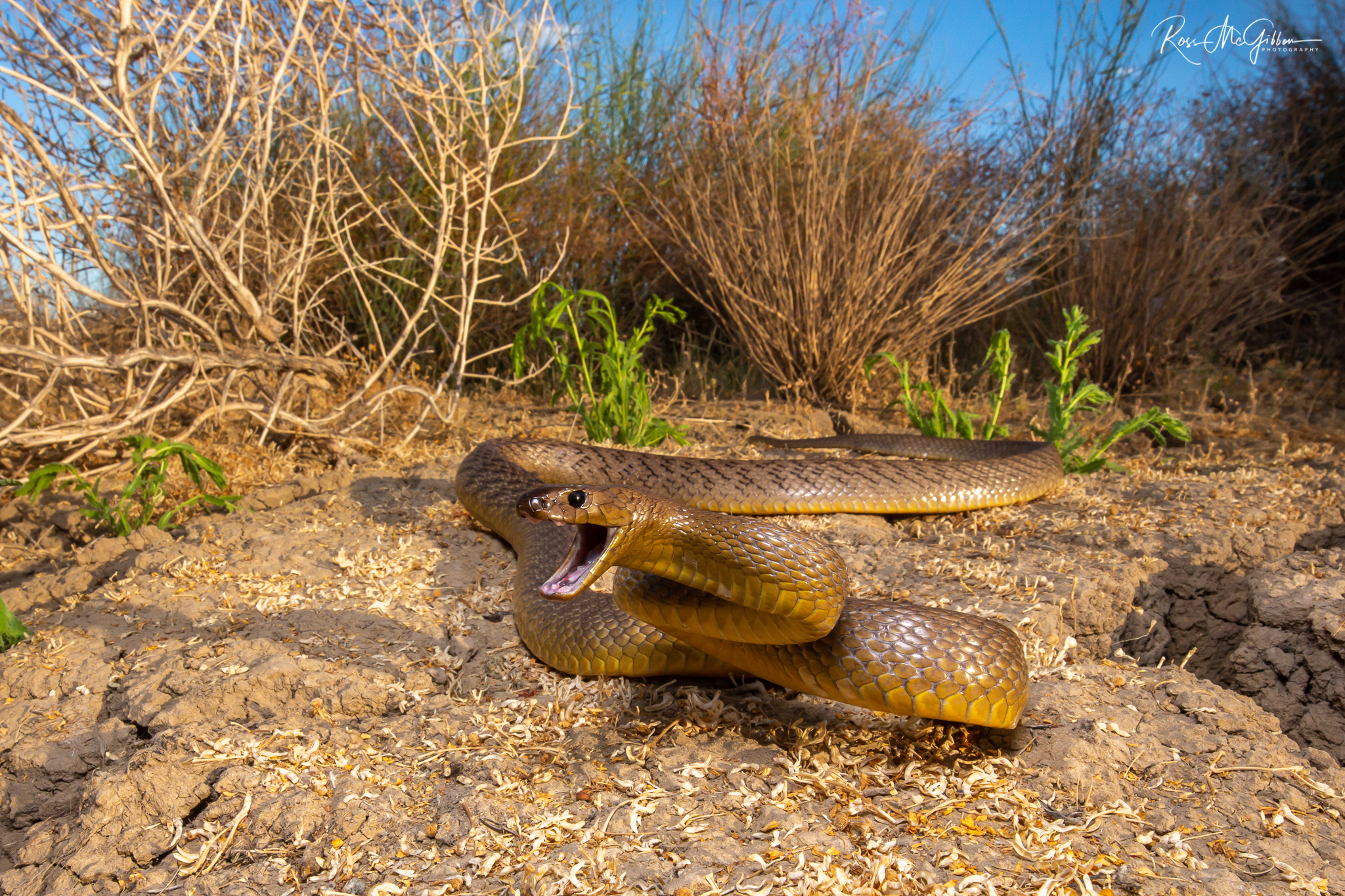
Mouth gaping is another common defensive display. It can range from subtly opening the mouth to a dramatic gape in which the snake exposes the inside of its mouth and fangs.
Taipans and Brown Snakes are particularly well known for this behaviour. The display serves as a visual warning and may be accompanied by other defensive behaviours.
Thrashing
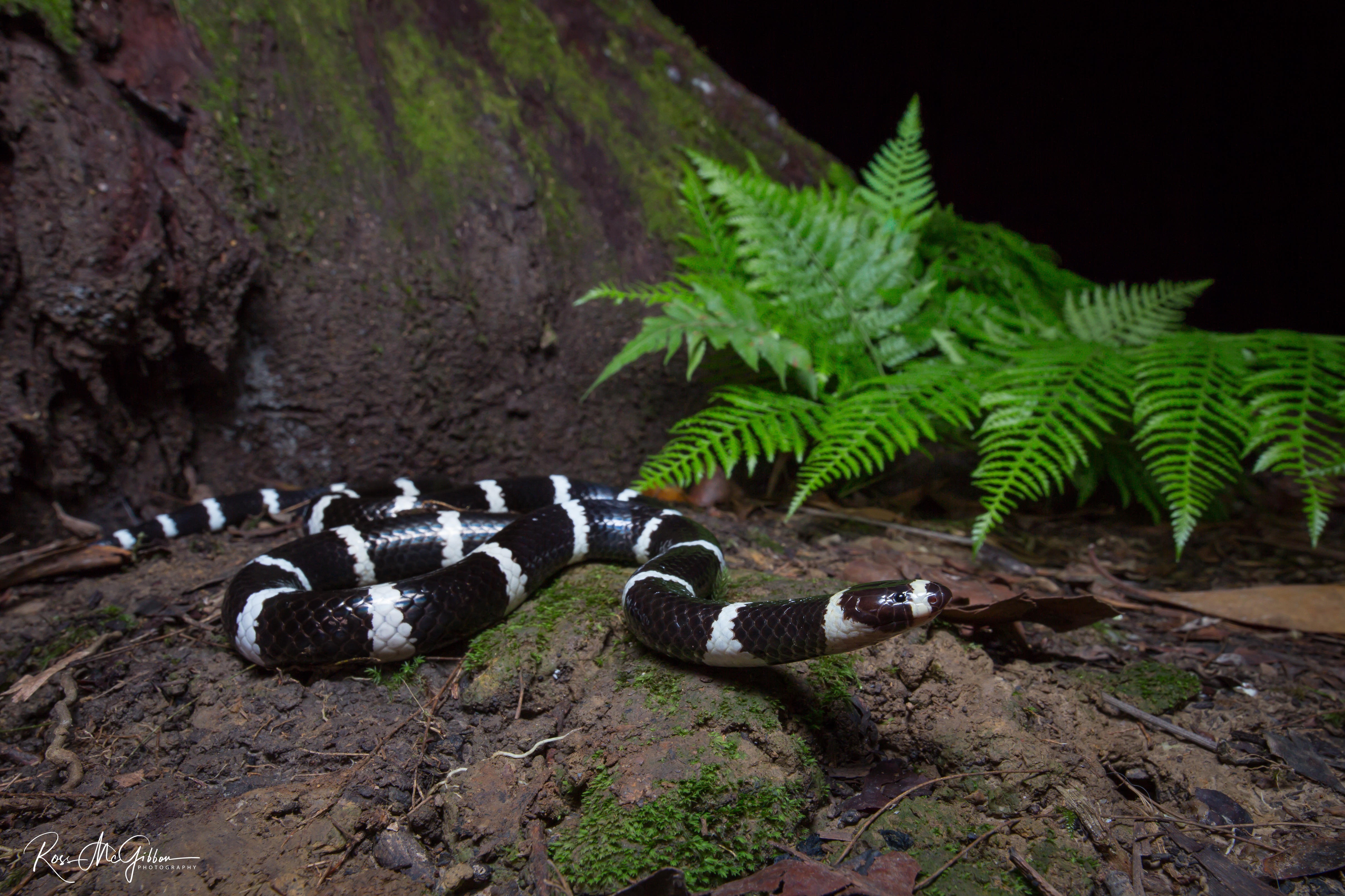
A snake may thrash or writhe when confronted, potentially making it more difficult for a predator to grab or restrain it. Rapid movement can also disturb leaf litter or dust, further disrupting a predator's ability to capture it.
Mock strikes, lunges and head-butting
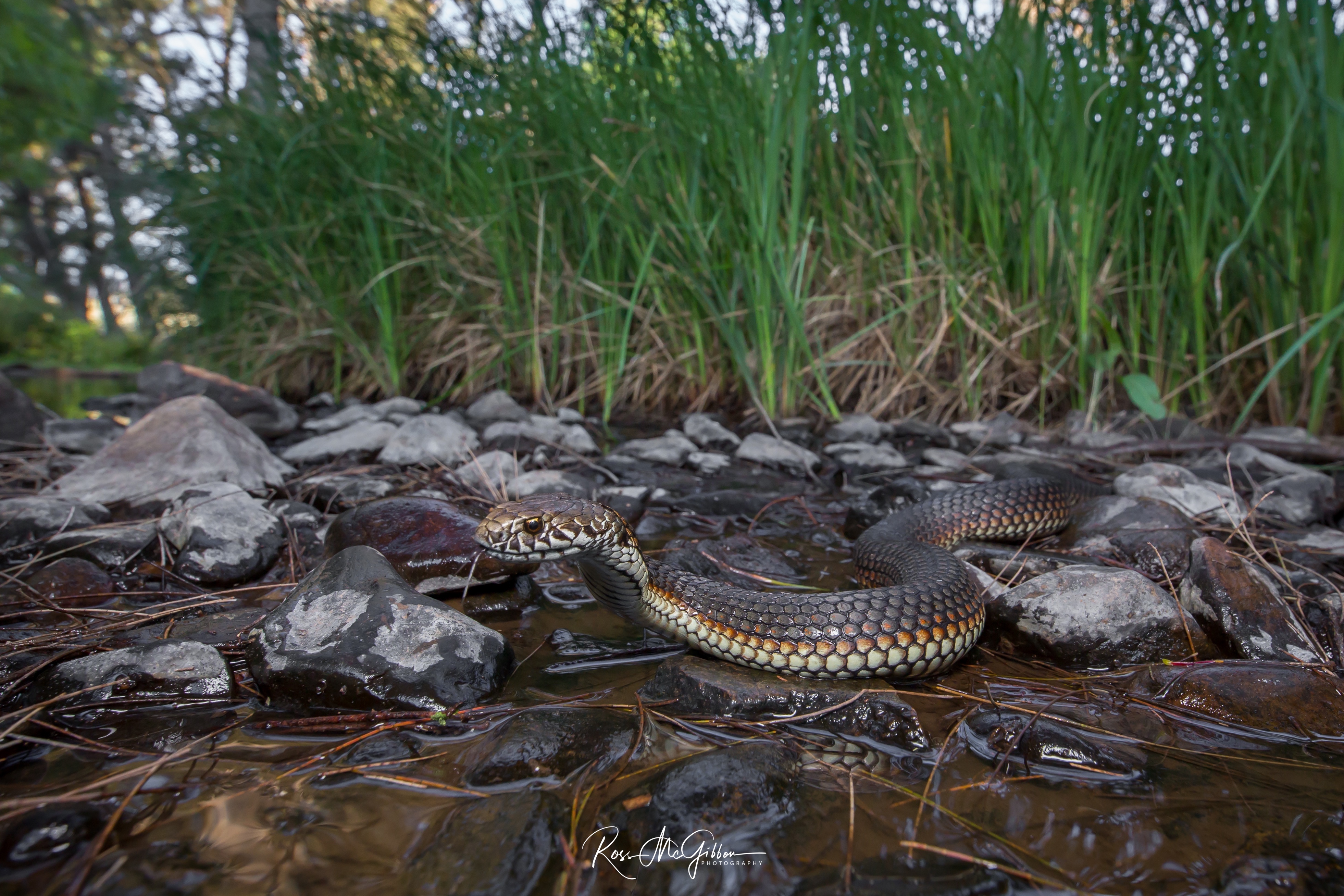
A defensive strike does not necessarily involve physical contact. A snake may lunge towards a perceived threat and stop short, sometimes repeatedly.
These mock strikes can be thought of as a warning: the snake is demonstrating what it is capable of without necessarily committing to a bite.
Some snakes may also head-butt or bump into a perceived threat. This may allow the snake to make physical contact without committing to a bite, potentially reducing the risk of damaging its fangs.
Advancing towards a perceived threat
One of the most misunderstood defensive behaviours is a snake moving towards a person.
People sometimes describe these encounters as being "chased" by a snake, assuming that the snake is deliberately pursuing them with the intention of biting. In reality, some snakes will advance towards a perceived threat as part of a defensive display, particularly when they feel cornered or are trying to make the threat retreat.
The objective is not necessarily to catch the predator. It is to make the predator back away.
An elephant provides a useful comparison. An elephant may charge towards an animal that gets too close to the herd, but once the intruder retreats to a safe distance, the elephant generally stops pursuing it. Some snakes behave in a similar way.
I have experienced this countless times while filming defensive snakes. A snake may advance towards me, only to immediately disappear down a hole, into nearby vegetation or even continue straight through my legs to escape.
What appears to be a snake "chasing" me is actually the snake communicating that I am too close and need to back away.
It is important, however, not to assume that an advancing snake cannot bite. A defensive snake can still make contact and deliver venom, particularly if it feels sufficiently threatened. The safest response is always to increase the distance between yourself and the snake and give it an unobstructed escape route.
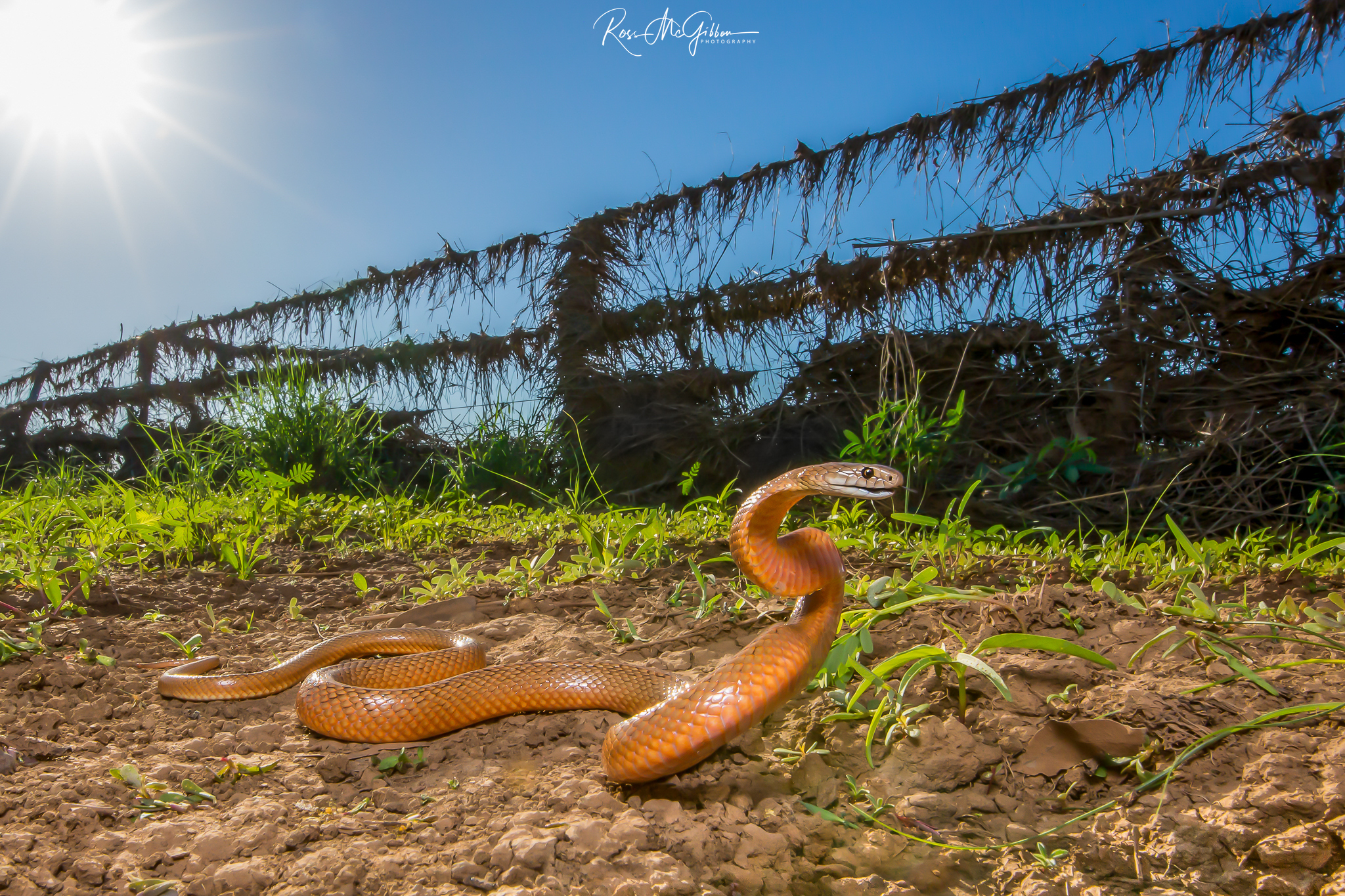
Biting and dry biting
If defensive displays fail to deter a perceived threat, a snake may eventually bite. A defensive bite may result in venom being injected, or it may be a dry bite, where little or no venom is injected.
Alternatively, there may be no opportunity for a warning display at all. A snake that is accidentally stepped on, for example, may bite immediately because it has been placed under sudden and extreme threat.
It is impossible to know at the time whether a bite is dry, so every bite from a potentially venomous snake should be treated as a medical emergency.
Defensive behaviour vs predatory behaviour
It is important to distinguish between a snake defending itself and a snake hunting prey.
When hunting, a snake is actively attempting to capture and subdue its prey. Depending on the species, this may involve a rapid strike, biting and holding, constriction or other methods of securing the prey. There is no reason for the snake to give the elaborate warnings that commonly accompany a defensive encounter.
When confronted by a human, the situation is entirely different. We are not prey. We are a large potential predator, and the snake's priority is generally to avoid being injured or killed.
The dramatic displays we see from defensive snakes are therefore not evidence that the snake wants to attack us. In many cases, they are the snake's way of saying "you are too close, back away and give me a chance to escape."
Understanding this distinction is one of the most important steps towards safely coexisting with Australia's snakes.
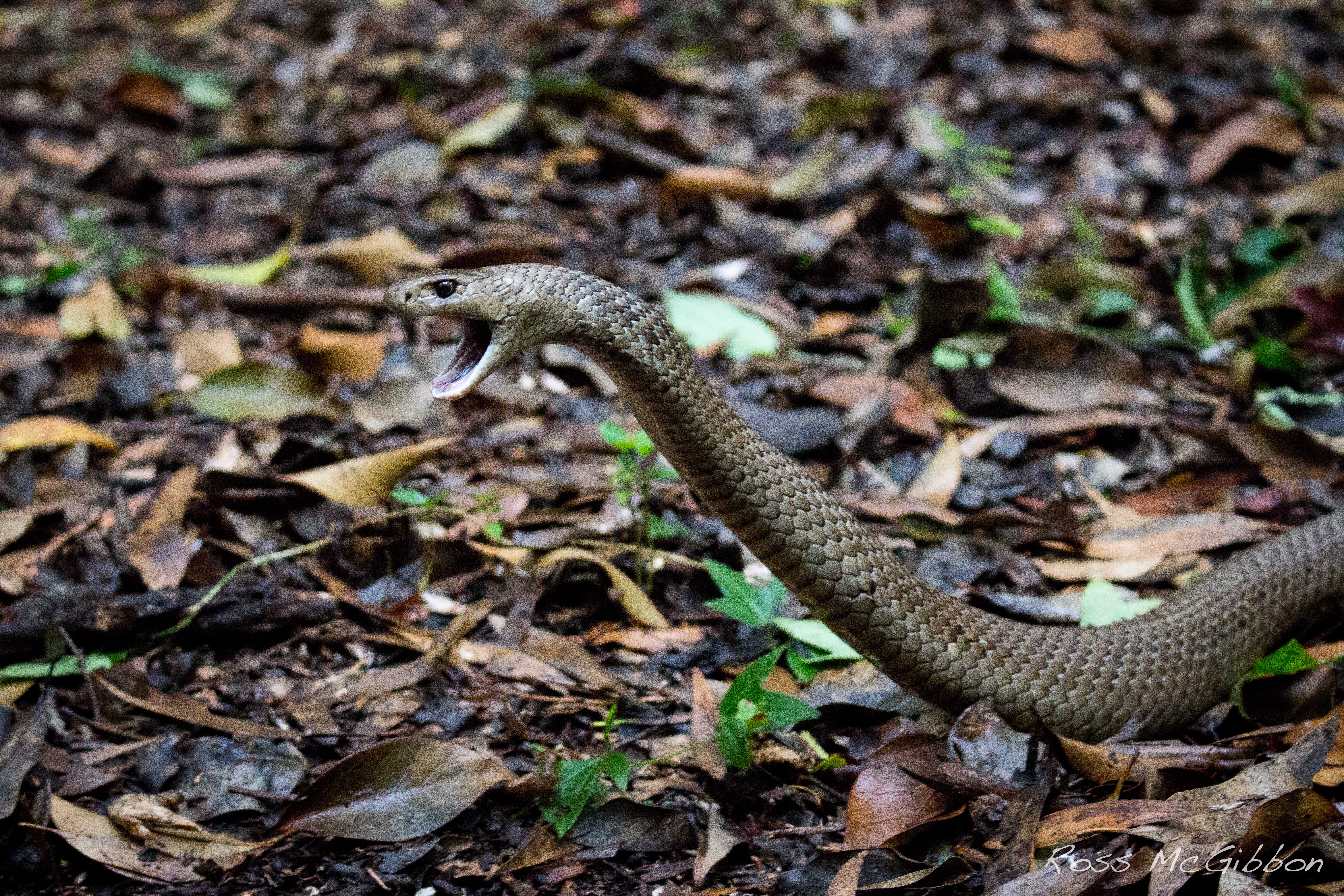
Eastern Brown Snake (Pseudonaja textilis), a species with a notably high frequency of dry bites, Toowoomba, Queensland.
What is a Dry Bite and How Do They Occur?
A venomous snake bite occurs when a snake's fangs penetrate the skin and venom is delivered from the venom glands through specialised venom-delivery structures in the fangs.
A dry bite occurs when a venomous snake bites but injects little or no venom. Dry bites are particularly associated with defensive bites, although they can occur for other reasons. A snake may bite without injecting venom, or may inject only a small amount.
Venom is an energetically costly resource to produce, and snakes do not necessarily inject venom every time they bite. The amount of venom delivered can vary considerably between species and may also depend on the circumstances, type of bite and the snake's behaviour.
When attacking prey, venom is an important tool for rapidly incapacitating and beginning the digestion of the prey. A defensive encounter is different. The snake is not attempting to kill and consume the animal confronting it, and venom may therefore not always be deployed.
This is particularly apparent in some Australian species.
The Eastern Brown Snake (Pseudonaja textilis), which is responsible for more recorded human snakebite fatalities in Australia than any other species, is well known for its high proportion of dry bites. Studies have reported human envenomation rates of approximately 20–40%, meaning that around 60–80% of recorded bites do not result in significant envenoming.
This does not mean that Eastern Brown Snakes deliberately "choose" not to inject venom every time they bite. Venom delivery is a complex process, and the amount delivered can vary considerably. The circumstances surrounding a bite, including whether it is a defensive bite or a bite associated with prey capture, can influence venom expenditure.
It is also important to understand that a dry bite does not mean a harmless bite. The physical bite can cause puncture wounds, pain and tissue injury, and any break in the skin carries a risk of infection.
More importantly, it is impossible to determine at the time of a bite whether venom has been injected. A bite from a potentially venomous snake must therefore always be treated as a medical emergency.
Do not wait for symptoms to appear. Keep the person still, apply a pressure immobilisation bandage and seek emergency medical assistance immediately.
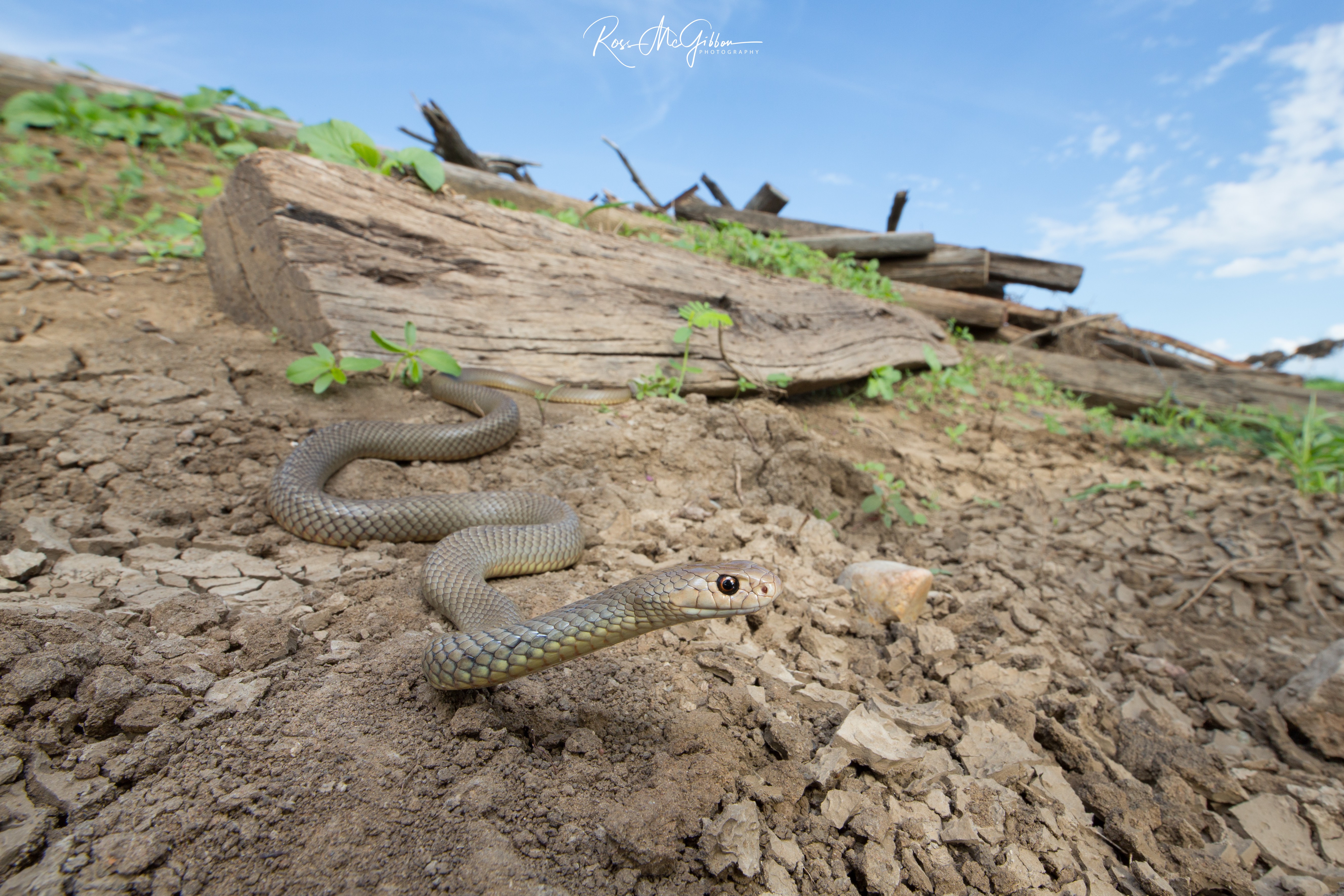
Eastern Brown Snake (Pseudonaja textilis), renowned for its high proportion of non-envenoming defensive bites, Winton, Queensland.
What should I do if I encounter a snake?
If you see a snake in the wild, remember that it is native wildlife and belongs there. Keep your distance and admire it from afar. Never approach, handle or attempt to move a snake, as this may provoke a defensive response.
If you find a snake in your yard, there is no need to panic. Think safety first. Calmly move children and pets indoors, alert anyone else nearby and, if necessary, let your neighbours know there is a snake in the area.
If you can safely observe the snake from a distance, note where it is and the direction it moves. This information can be extremely useful if you need to contact a licensed snake catcher. Do not follow the snake or approach it to keep track of its movements.
In many cases, a snake found in your yard is simply passing through in search of food, water, shelter or a mate. If it remains on your property and you would like it removed, contact your local licensed snake catcher. Having the details of a reputable catcher saved in your phone before you need them is a good precaution.
If a snake enters your house, try to contain it to the room it is in by closing internal doors. You can place a rolled towel along the bottom of the door to help prevent the snake from moving into other areas of the house. Keep people and pets away from the room and contact a licensed snake catcher.
Never attempt to catch, handle or remove a snake yourself unless you have the appropriate permit, training and experience.
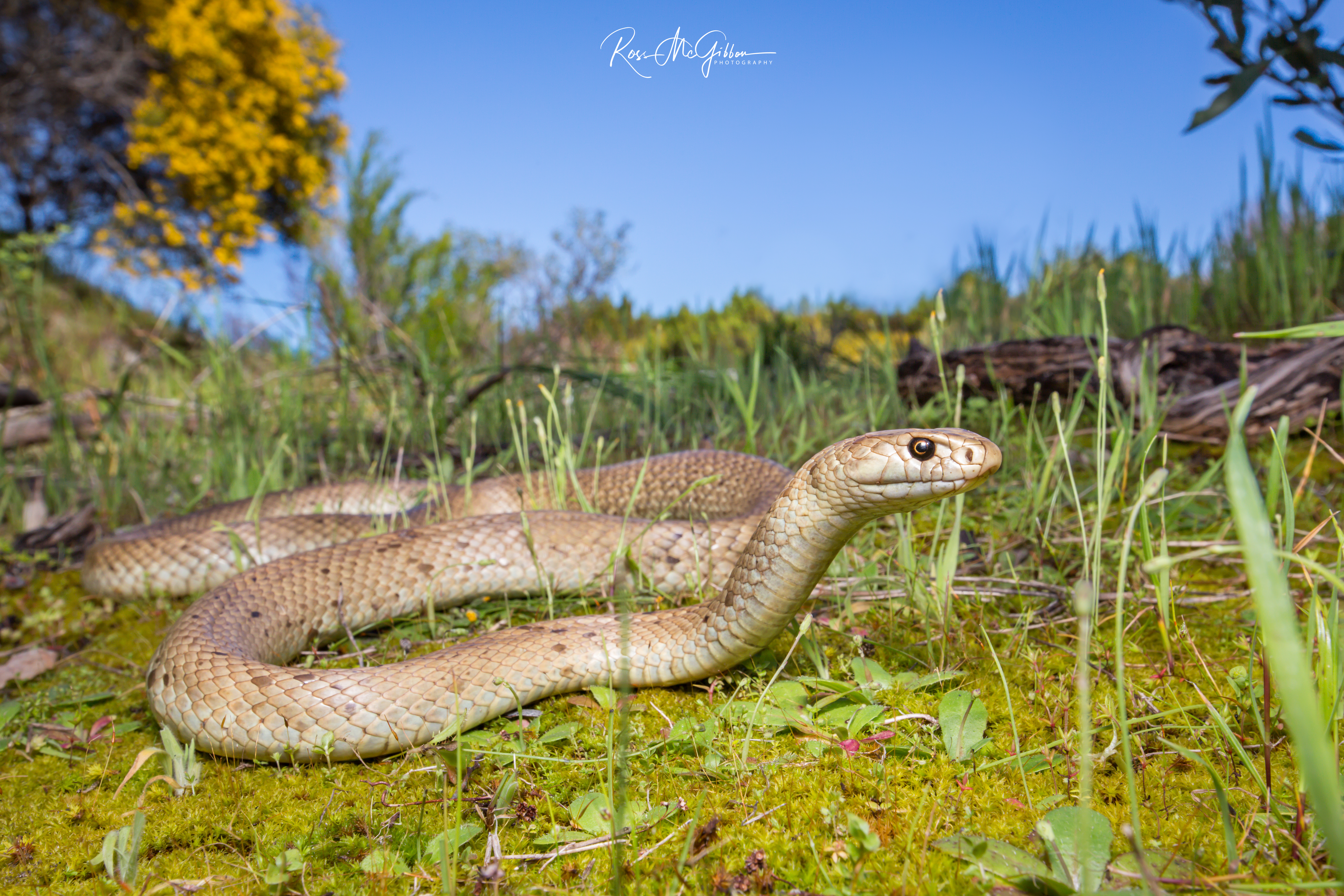
What if I live in a remote area and there are no licensed snake catchers?
If you live remotely where a licensed snake catcher isn't readily available, knowledge and preparation are your best tools. The more you know about the snakes in your area, the better equipped you'll be to respond appropriately when an encounter occurs.
Learn about your local species through reputable books and field guides, and consider contacting local snake educators for identification posters or other resources relevant to your area. Teach your family, particularly children, how to recognise and safely respond to snakes.
If it is safe to do so, take a photograph from a distance and send it to a reputable snake catcher for identification and advice. Established snake-identification groups on social media may also have experienced, approved identifiers who can assist.
If a snake is confidently identified as non-venomous and harmless, relocating it yourself may be an option, provided this is legal in your state or territory and you have the knowledge and equipment to do so safely. Never handle a snake you cannot confidently identify.
If you regularly encounter snakes, consider completing a recognised snake relocation course through a reputable provider. This can teach you how to identify, capture and relocate local species safely. Always check your state's permit and licensing requirements.
If you cannot confidently identify the snake as harmless, treat it as potentially venomous. Keep people and pets away, give the snake plenty of space and seek professional advice where possible.
For remote living, self-reliance doesn't mean taking unnecessary risks; it means having the knowledge and preparation to respond appropriately when they arise.
What should I do if a snake becomes defensive?
If a snake reacts defensively to your presence, for example by rearing, flattening its neck, gaping or mock striking, your priority is to increase the distance between you and the snake. Calmly move away, without making sudden movements, and give the snake plenty of space to retreat. Once you are far enough away, the snake will usually move off or return to its normal behaviour.
If you suddenly find yourself extremely close to a snake, such as almost stepping on one or having one slither past your feet, stop and remain still. Sudden movement may startle the snake and trigger a defensive response. Give the snake an opportunity to move away, then slowly retreat once it has moved to a safe distance.
If the snake remains defensive, do not attempt to walk past it, touch it or encourage it to move. Instead, continue to increase the distance between yourself and the snake and allow it an unobstructed escape route.
Remember: a defensive snake is asking for space, not looking for a fight.
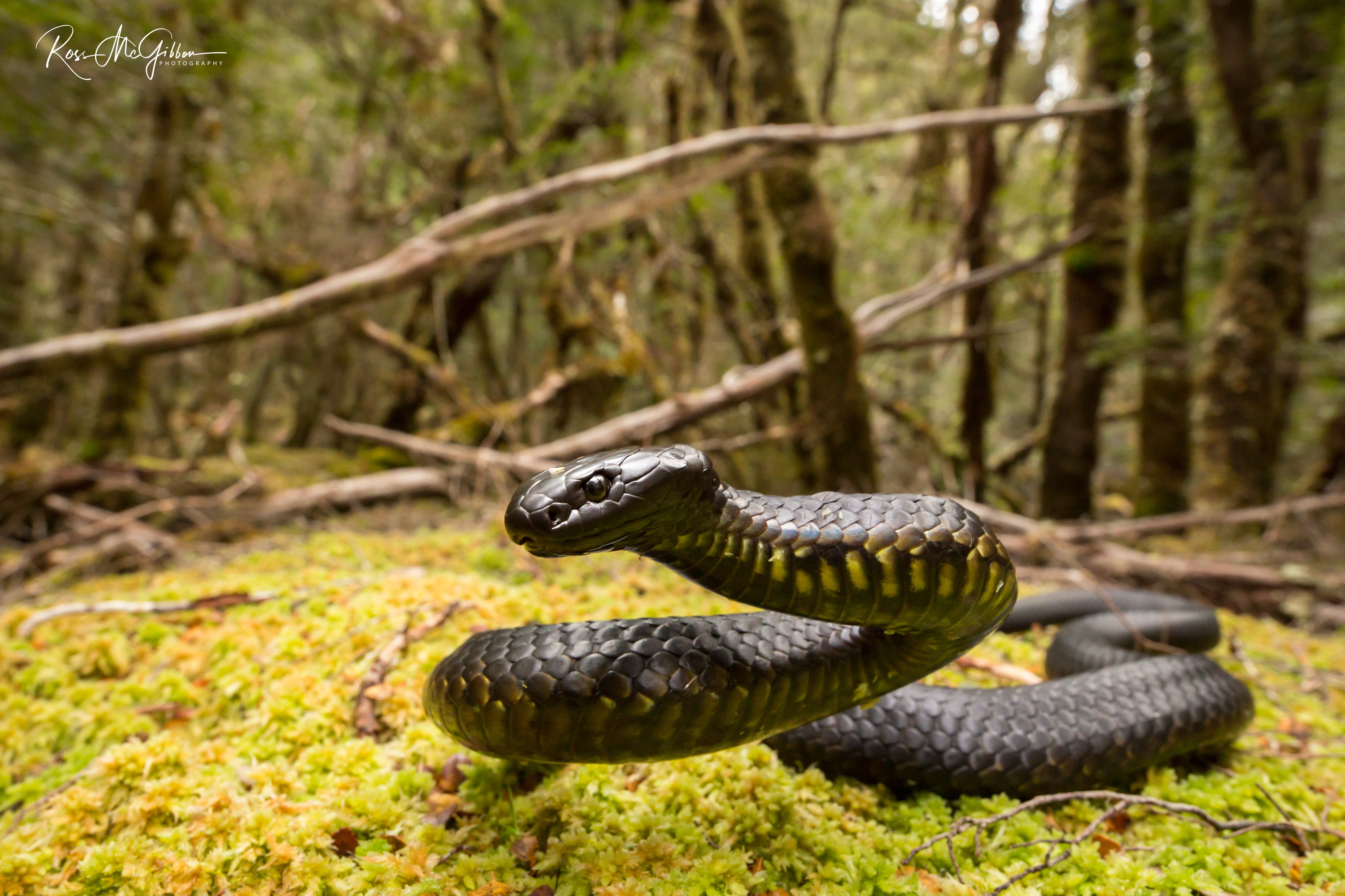
A Tiger Snake (Notechis scutatus) in a defensive posture, Overland Track, Tasmania
Do snakes chase you?
Snakes do not normally pursue people. When people describe being "chased" by a snake, they are often interpreting the snake's movement towards them as an attempt to pursue, catch and bite them.
As discussed in Advancing towards a perceived threat, some defensive snakes will move towards a perceived threat in an attempt to make it retreat. If the person continues moving away, the snake may appear to follow them for a short distance.
The snake is generally not trying to catch the person. It is attempting to create enough space to feel safe or reach an escape route.
There can be exceptions, such as a snake actively pursuing prey, but a person is not prey for Australia's snakes. If a snake appears to be chasing you, the safest response is to calmly increase your distance and give it a clear path to escape.
Are snakes deterred by vibrations?
Snakes can detect vibrations travelling through the ground and can use these cues to detect approaching animals, predators and other potential threats. They are not deaf, as is sometimes claimed, but have a specialised hearing system that allows them to detect low-frequency sound and vibrations.
Research on Australian snakes has shown that vibrations and low-frequency sounds can influence their behaviour. Brown Snakes, Taipans and Death Adders have been shown to be more likely to move away from certain sound sources, suggesting that they can use these cues to detect and avoid potential threats. However, responses vary considerably between species, individuals and frequencies. Some snakes may move away, while others may remain still, investigate the source or display defensive behaviour.
So, what happens if you stomp your feet when you see a snake? The snake may detect the vibrations and may even move away, but there is no evidence that deliberately stomping is a reliable way to make a snake leave. Its response will depend on the species, the nature of the vibrations and the circumstances in which they are detected.
In other words, snakes can certainly feel you coming, but you cannot assume that they will always respond by moving away. Vibrations are one of many environmental cues snakes use to assess what is happening around them, and their response is not predictable enough for stomping to be considered a snake deterrent.
Are Australian snakes territorial?
The idea that Australian snakes are territorial is a common misconception. While territorial behaviour does occur in some snake species, most Australian snakes do not defend a fixed area of land in the way that people often imagine.
Territorial animals such as wolves and lions may establish and defend an area against rivals. Snakes generally don't mark out a permanent territory and defend it against humans or domestic animals.
Instead, most snakes occupy a home range: an area through which they move in search of the resources they need, including food, water, shelter and mates. The size and use of a home range can vary considerably between species and individuals.
The term "territorial" is sometimes used when someone encounters a snake that refuses to move away or appears to stand its ground. However, this behaviour is generally better understood as defensive behaviour. The snake is not protecting a piece of land from the person; it is responding to a perceived threat and attempting to protect itself.
This distinction is particularly important when a snake is encountered near a house or in a backyard. A snake isn't necessarily "claiming" the property as its territory. It may simply be moving through its home range in search of food, water, shelter or a mate.
Male snakes engaged in combat are also sometimes described as being territorial. However, these contests are generally associated with competition between males for access to females, rather than the defence of a territory. The stronger male may gain an advantage over his rival and subsequently have greater access to a nearby receptive female.
So, while territorial behaviour does exist among some snakes, describing a defensive Australian snake as "territorial" is usually an inaccurate interpretation of what is actually happening. Understanding the difference between territorial behaviour, home-range use and defensive behaviour gives us a much better insight into why snakes behave the way they do.
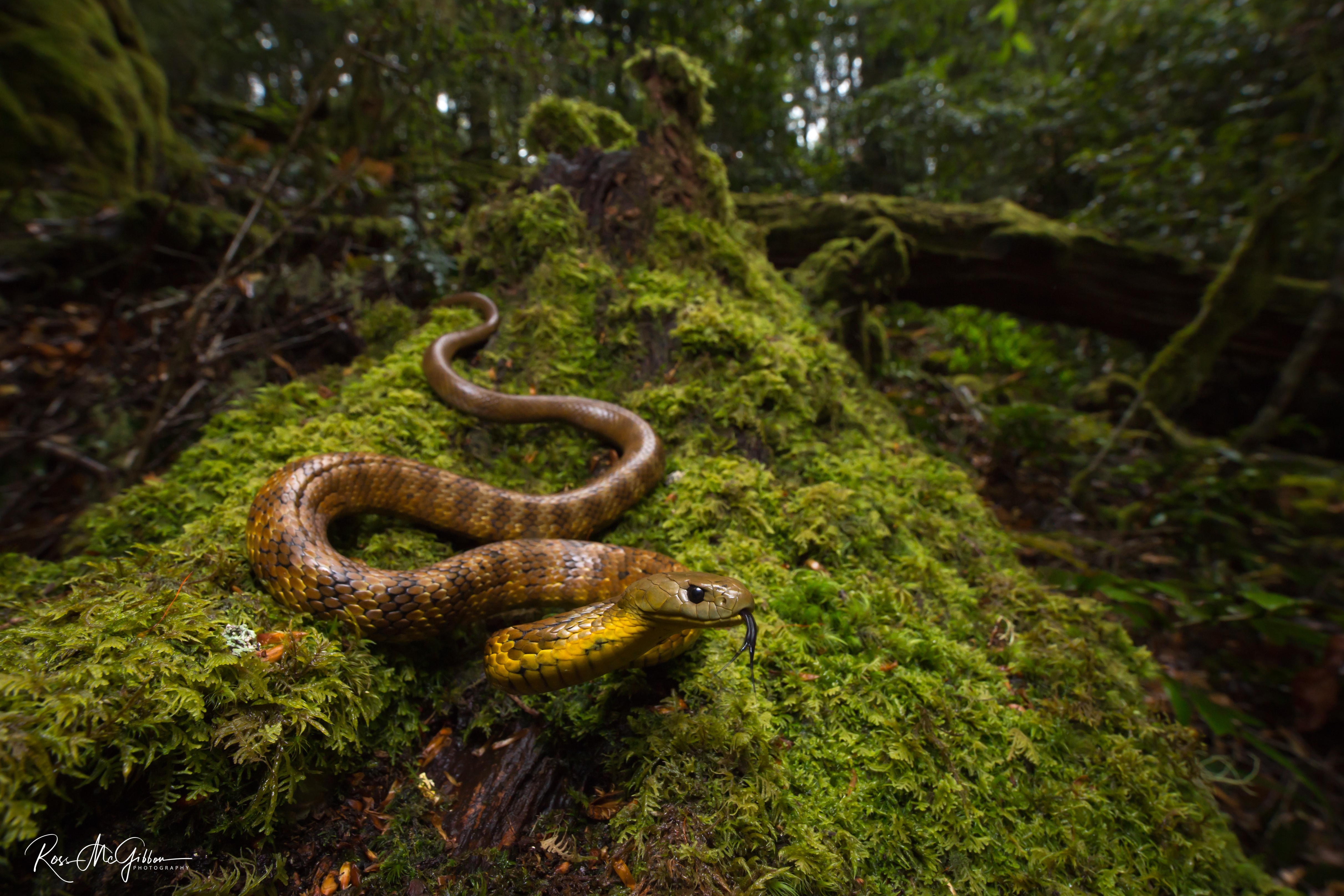
Do snakes protect their young or eggs?
Unlike many mammals and birds, most Australian snakes provide little or no parental care after reproduction. However, there are some exceptions.
Female Carpet Pythons (Morelia spp.) remain with their eggs after laying, coiling around the clutch and using their body to help regulate its temperature during incubation. The female may also become defensive and strike if disturbed while guarding her clutch.
Once the eggs hatch, however, the relationship ends. The young disperse and are left to fend for themselves, with no ongoing parental care.
This is an important distinction: a female Carpet Python may defend herself and her clutch when disturbed, but this should not necessarily be interpreted as the same kind of deliberate parental protection seen in mammals or birds.
For most Australian snakes, once the eggs are laid or the young are born, the offspring are on their own.
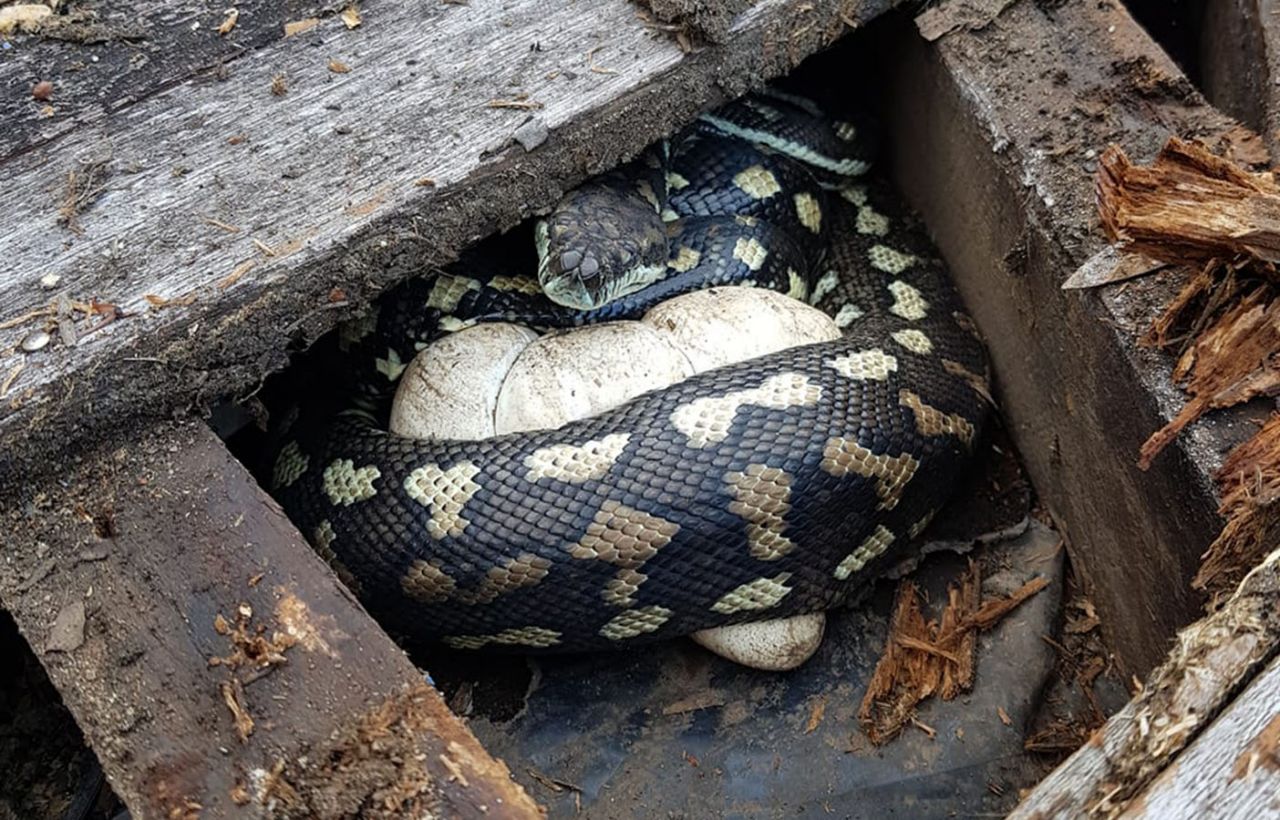
If I see a baby snake, will there be a protective parent around?
From the moment they hatch or are born, Australian snakes are generally equipped with the instincts and abilities needed to survive independently. Unlike many mammals and birds, snakes generally provide little or no parental care.
Male snakes play no role in raising their young. After mating, the male leaves and provides no parental care.
In oviparous (egg-laying) species, the female generally leaves the eggs after laying them. The notable exception is Carpet Pythons (Morelia spp.), where the female remains with her clutch during incubation.
In viviparous (live-bearing) species, the young are born fully developed and generally receive no care from their mother after birth. They quickly disperse and begin living independently.
There are, however, occasional exceptions. Red-bellied Black Snakes (Pseudechis porphyriacus) give birth to live young, and females and their young may sometimes be found together shortly after birth. Females may also share retreats and basking sites with other females, particularly during late pregnancy. These observations do not indicate strong parental care or deliberate protection of the young.
In most cases, if you encounter a juvenile snake, there won't be a protective parent nearby. The young are generally independent from birth or hatching and are left to fend for themselves.
The main exception is the maternal egg attendance seen in Carpet Pythons. Occasionally, a mother and her young may also be found together shortly after birth, but this should not be interpreted as the mother actively protecting or raising them.
In summary, Australian snakes generally do not provide parental care, and finding a baby snake does not mean its mother is nearby or coming to its defence.
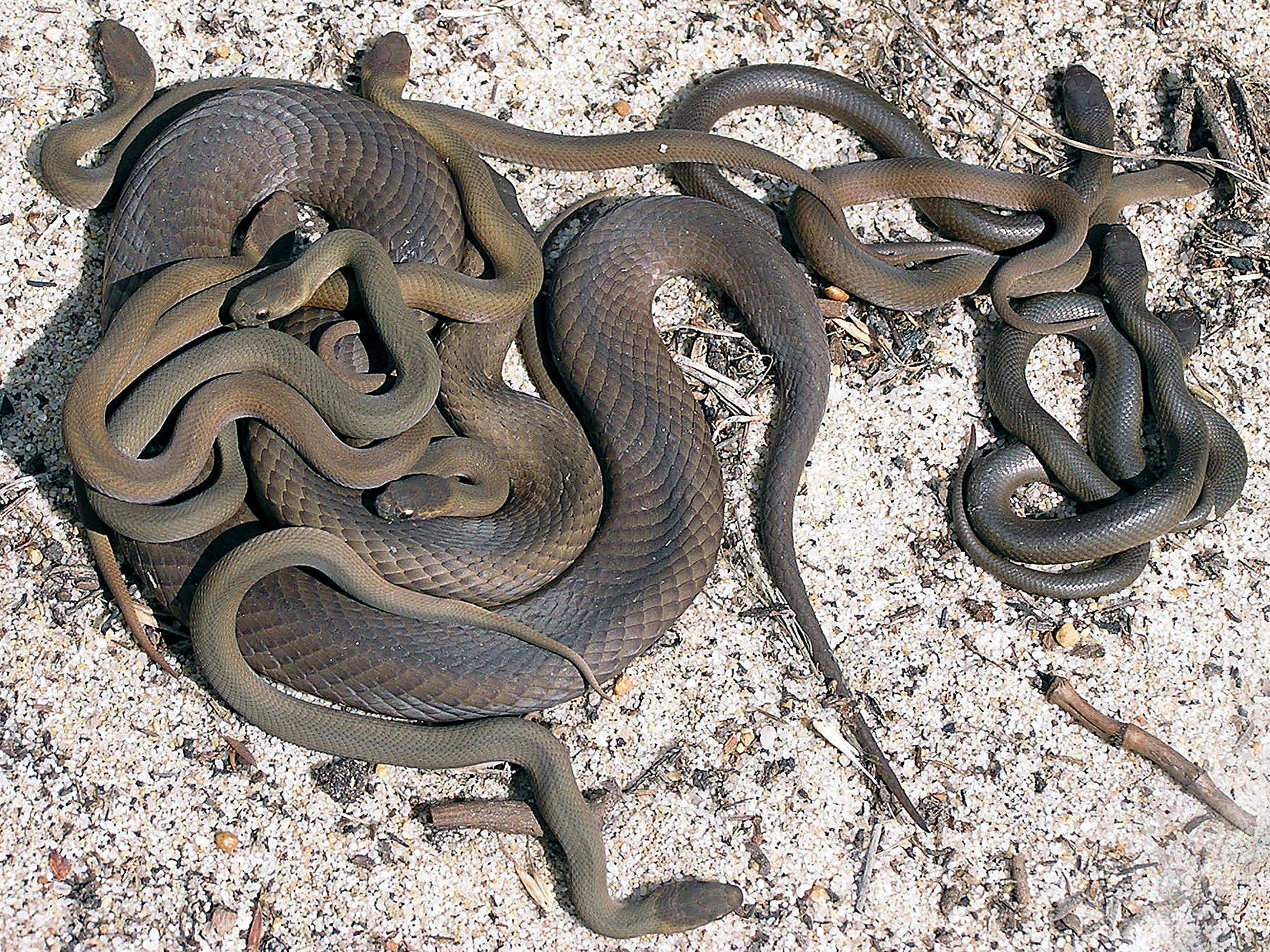
Mother and neonate (newborn) Bardicks (Echiopsis curta), Wanneroo, Western Australia. Image credit: Brian Bush. These neonates will become independent within hours of birth, with no ongoing maternal care.
Is a bite from a juvenile venomous snake more dangerous because they can't control the amount of venom they deliver?
No. This is a common misconception. There is no good evidence that juvenile venomous snakes are inherently more dangerous because they cannot control the amount of venom they inject.
Juvenile snakes are generally smaller than adults and have smaller venom glands and shorter fangs, meaning they typically have less venom available to deliver. However, venom delivery is influenced by numerous factors, including the species, size and condition of the snake, the circumstances of the bite and whether the snake is delivering a defensive or predatory bite.
An adult snake may therefore have the potential to deliver a much larger quantity of venom than a juvenile, but this does not mean every adult bite will result in more venom being injected.
Importantly, juvenile snakes of highly venomous species should never be underestimated. Even a relatively small amount of venom can cause serious envenoming, and you cannot determine how much venom has been injected simply by looking at the snake.
Whether the bite is from a juvenile or adult, the response is the same: treat every bite from a potentially venomous snake as a medical emergency, apply appropriate snakebite first aid and seek urgent medical attention.
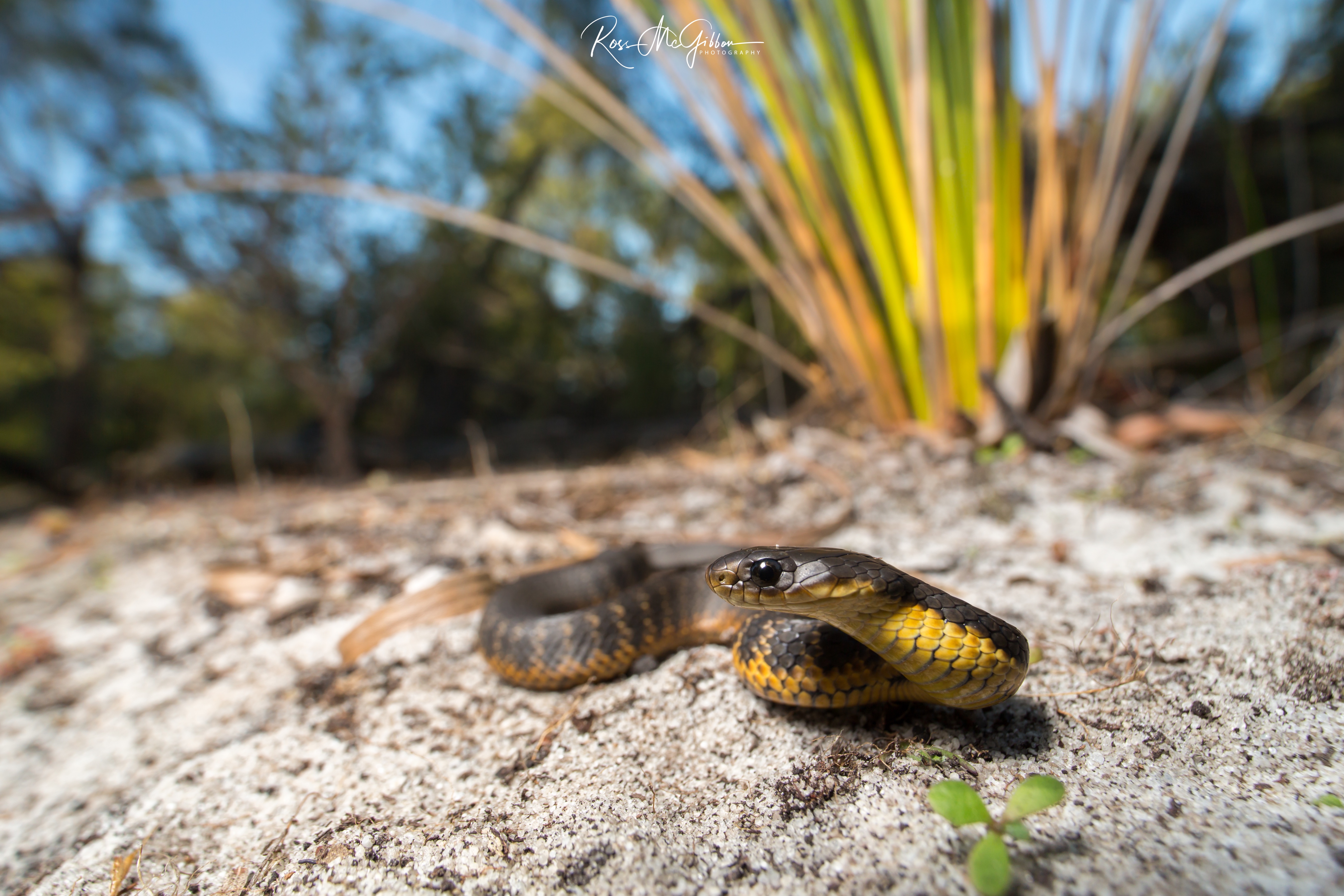
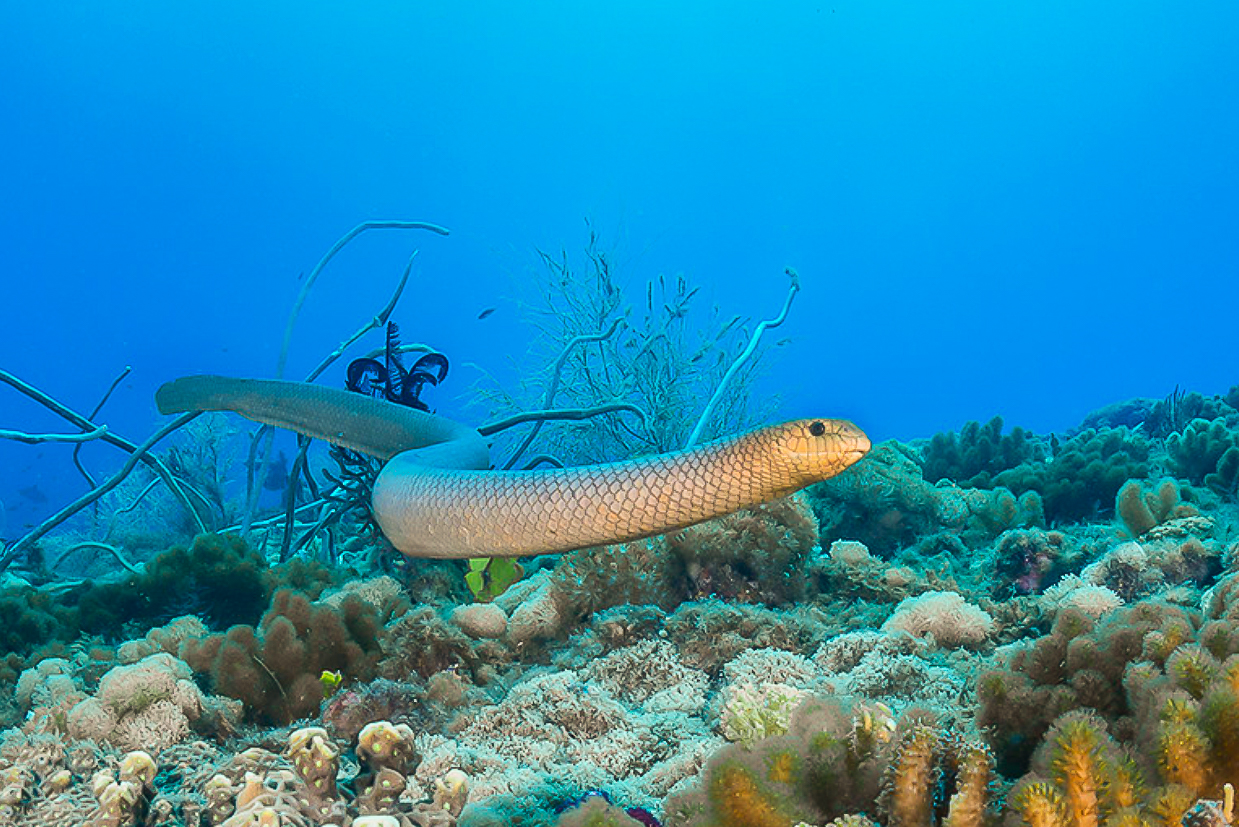
Is it true that sea snakes can only bite divers between their fingers because they have small mouths and rear fangs?
No, this is a common misconception. Sea snakes belong to the Elapidae, the family of front-fanged venomous snakes that includes Australia's terrestrial (land-dwelling) species. Their fangs are fixed towards the front of the upper jaw, not positioned at the rear of the mouth. Sea snakes are therefore capable of biting and envenoming a person in much the same way as terrestrial elapids.
Sea snakes generally have relatively short fangs, typically around 2–5 mm long. While this can make it more difficult for their fangs to penetrate some materials, such as wetsuits, they can still bite exposed skin. Whether a bite penetrates clothing depends on factors such as the thickness and type of material, where the bite occurs and how the snake makes contact.
Sea snakes are generally curious and not considered aggressive towards divers. If one approaches you in the water, remain calm and allow it to investigate or move away. Never attempt to touch, kick or strike the snake. Sudden or aggressive movements may provoke a defensive response.
As with any potentially venomous snake, the safest approach is to give it plenty of space and allow it to move away on its own.
Can you identify a non-venomous snake from its larger head size?
No. Head size and shape should never be used to determine whether a snake is venomous.
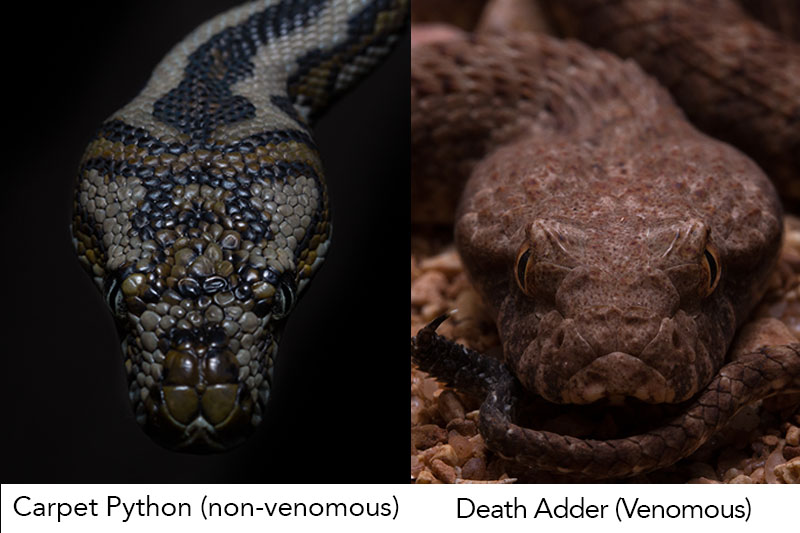
It is true that many Australian pythons have relatively large heads that are clearly distinct from the neck, while many Australian venomous snakes have smaller heads with less distinction between the head and body. However, there are important exceptions.
For example, venomous Death Adders have large, broad heads that are clearly distinct from the neck, much like pythons. Conversely, the non-venomous Keelback has a relatively small head with little distinction from the neck, similar to many venomous Brown Snakes.
The following comparisons demonstrate why head size and shape are unreliable indicators of whether a snake is venomous.
Below: Both the Carpet Python and Death Adder have large heads that are clearly distinct from the neck and body.
Below: Both the non-venomous Australian Keelback and highly venomous Western Brown Snake have relatively small heads with little distinction from the neck and body.
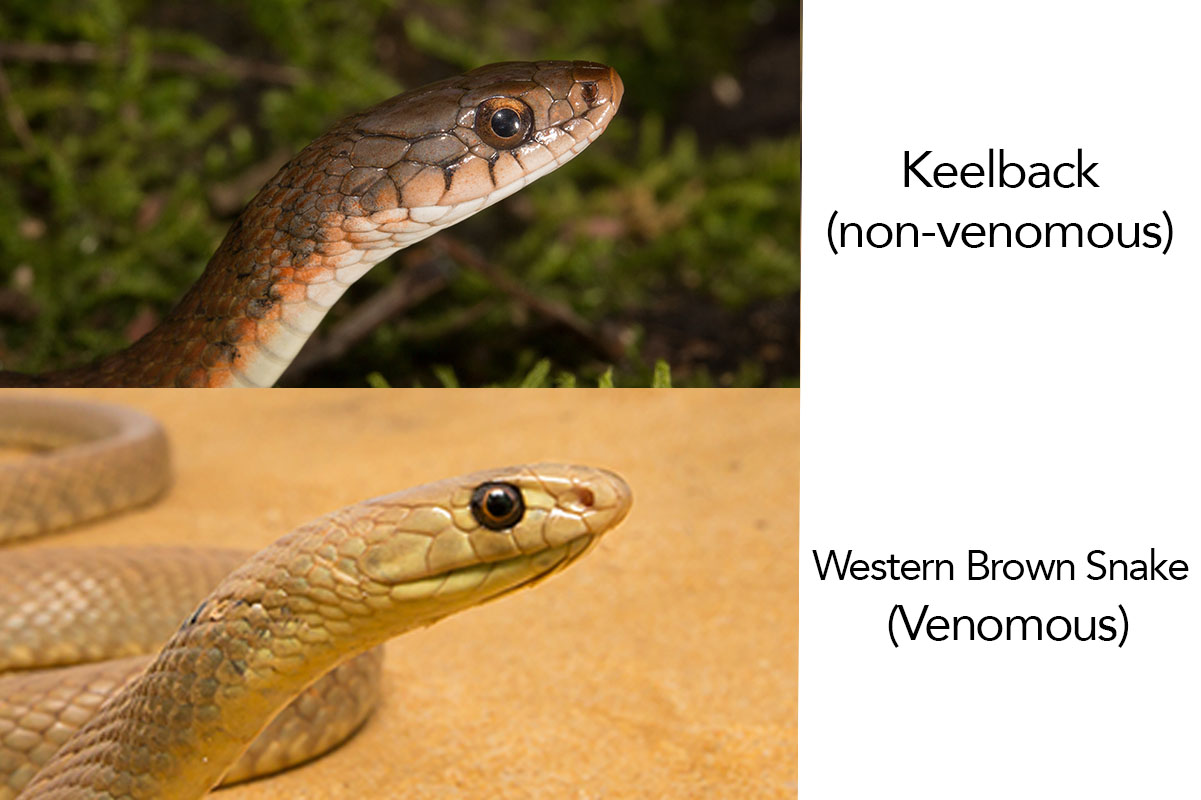
These examples demonstrate why head size and shape are not reliable methods of identifying whether an Australian snake is venomous. If you cannot confidently identify a snake, treat it as potentially venomous and keep your distance.
Is a King Brown a Brown Snake?
The common misconception
The King Brown, also known as the Mulga Snake (Pseudechis australis), is not a Brown Snake. It belongs to the genus Pseudechis, a group of Australian black snakes that includes the Red-bellied Black Snake (Pseudechis porphyriacus).
The word “Brown” in the common name can be misleading. It refers to the snake’s generally brownish colouration rather than indicating a relationship with Australia’s true Brown Snakes in the genus Pseudonaja. Despite its common name, Pseudechis australis is a member of the black snake group.
The origin of the “King” in King Brown is less certain. It may be associated with the species’ impressive size and its tendency to prey on other snakes, perhaps drawing a loose comparison with the King Cobra. However, the exact origin of the name is not well documented, so this should be regarded as a possible explanation rather than an established fact.
The common-name debate
There has been a long-running debate over whether this species should be called the King Brown or the Mulga Snake. Both names are widely used, and both refer to the same species, Pseudechis australis.
The name Mulga Snake is preferred by many modern Australian authorities because King Brown can suggest a relationship with the true Brown Snakes of the genus Pseudonaja. The two groups are not closely related, and this confusion can be particularly important when discussing snakebite and antivenom.
It is sometimes argued that calling a Mulga Snake a King Brown could result in the wrong antivenom being given after a bite. While confusion over common names has historically been a concern, modern snakebite treatment does not rely solely on a patient's identification of the snake. In hospital, clinicians consider the geographical location of the bite, clinical signs and symptoms, and laboratory results when determining whether envenomation has occurred and which antivenom is appropriate. Snake appearance is specifically considered an unreliable means of identification in current WA Health guidelines, and toxicology advice is used when required.
However, this does not make King Brown an incorrect name. King Brown Snake and Mulga Snake are both established common names for Pseudechis australis, and both continue to appear in Australian scientific, museum and government sources. The Australian Museum, for example, lists Mulga Snake as the primary common name and King Brown Snake as an alternative name.
Mulga Snake isn’t perfect either. The name refers to mulga vegetation, which occurs across much of the species’ range, but Pseudechis australis occupies a wide variety of habitats, many of which aren’t dominated by mulga.
Ultimately, both names have their merits and shortcomings, but both refer to the same species. If you want to avoid common-name ambiguity altogether, the scientific name Pseudechis australis leaves no room for confusion.
To cover all bases, call it the Mulga Snake, also known as the King Brown (Pseudechis australis).
Is it illegal to kill snakes?
In Australia, snakes are protected wildlife, and the laws governing their capture, handling, relocation and killing vary between states and territories. In most jurisdictions, you cannot legally catch, handle or kill a native snake without a valid permit or an applicable legal exemption.
There is, however, an important distinction between deliberately killing a snake and taking reasonable action to protect yourself or another person from an immediate threat.
For example, if a snake is actively attacking you or another person and you use whatever reasonable means are necessary to stop the attack, the circumstances may fall under legal provisions allowing people to protect themselves or others. The same principles may apply in some circumstances when protecting a domestic animal, although the relevant laws differ between jurisdictions.
This does not mean you can encounter a snake on your property, retrieve a shovel, firearm or other weapon and kill it simply because it is there. Nor does it permit people to deliberately kill snakes in the bush or elsewhere in their natural habitat.
If you encounter a snake, the safest and most appropriate response is to keep your distance, give it an escape route and allow it to move away. If it needs to be removed, contact an appropriately licensed snake catcher or seek advice from the relevant wildlife authority.
Deliberately killing snakes is not only potentially illegal, but also unnecessary and potentially dangerous. Australia has a remarkable diversity of native snakes, and they play an important role in our ecosystems.
Am I protecting my family by killing snakes?
In Australia, there are only around two recorded human deaths from snakebite each year, so the actual risk is considerably lower than public perception might suggest. Children are rarely the victims of fatal snakebite, while many serious bites occur when adults attempt to kill, capture or otherwise interfere with snakes.
If your priority is protecting your family, confronting a snake is one of the least effective ways to do it. You can't protect your family if you put yourself in hospital trying to kill a snake.
Killing a snake is also a short-term solution that does little to address why snakes are visiting your property in the first place. Instead, consider the following:
-
You increase your risk of being bitten. Approaching, cornering or attempting to kill a snake dramatically increases the likelihood of a defensive bite.
-
Removing one snake doesn't remove the reasons other snakes may visit. If your property provides food, water, shelter or suitable habitat, other snakes may eventually move through the same area. Removing a snake therefore does not necessarily solve the underlying problem.
-
Snakes provide valuable pest control. Many Australian snakes prey on rodents and other animals, helping to regulate populations of introduced species that may otherwise become pests, including rats and mice.
-
Snakes are an important part of the ecosystem. They occupy an important position in food webs, acting as predators while also providing food for larger predators, including birds, mammals and other reptiles.
-
There are more snakes than most people realise. Australia is home to around 240 recognised snake species, including subspecies and marine snakes. Of these, around 40 terrestrial (land-dwelling) species possess venom considered potentially life-threatening to humans, with approximately 10–12 species recorded as responsible for human fatalities.
-
You may not know what you're killing. Many people cannot reliably identify the snakes they encounter, and harmless snakes and even legless lizards are often killed because they are mistaken for venomous species.
I learnt this lesson myself as a teenager when my stepfather killed a harmless Black-headed Python on our farm because he believed it was an Inland Taipan simply because it had a black head. Had he known more about the snakes in our region, he would have known that Inland Taipans did not occur there and that Black-headed Pythons are non-venomous.
Black-headed Pythons also prey on other reptiles, including venomous snakes. In other words, the snake he killed was potentially helping to control the very snakes he feared.
If you genuinely want to protect your family, knowledge is far more effective than killing. Learn which species occur in your area, understand their behaviour, reduce the things that attract them to your property and know what to do when you encounter one. Keeping your distance is safer for you, your family and the snake.
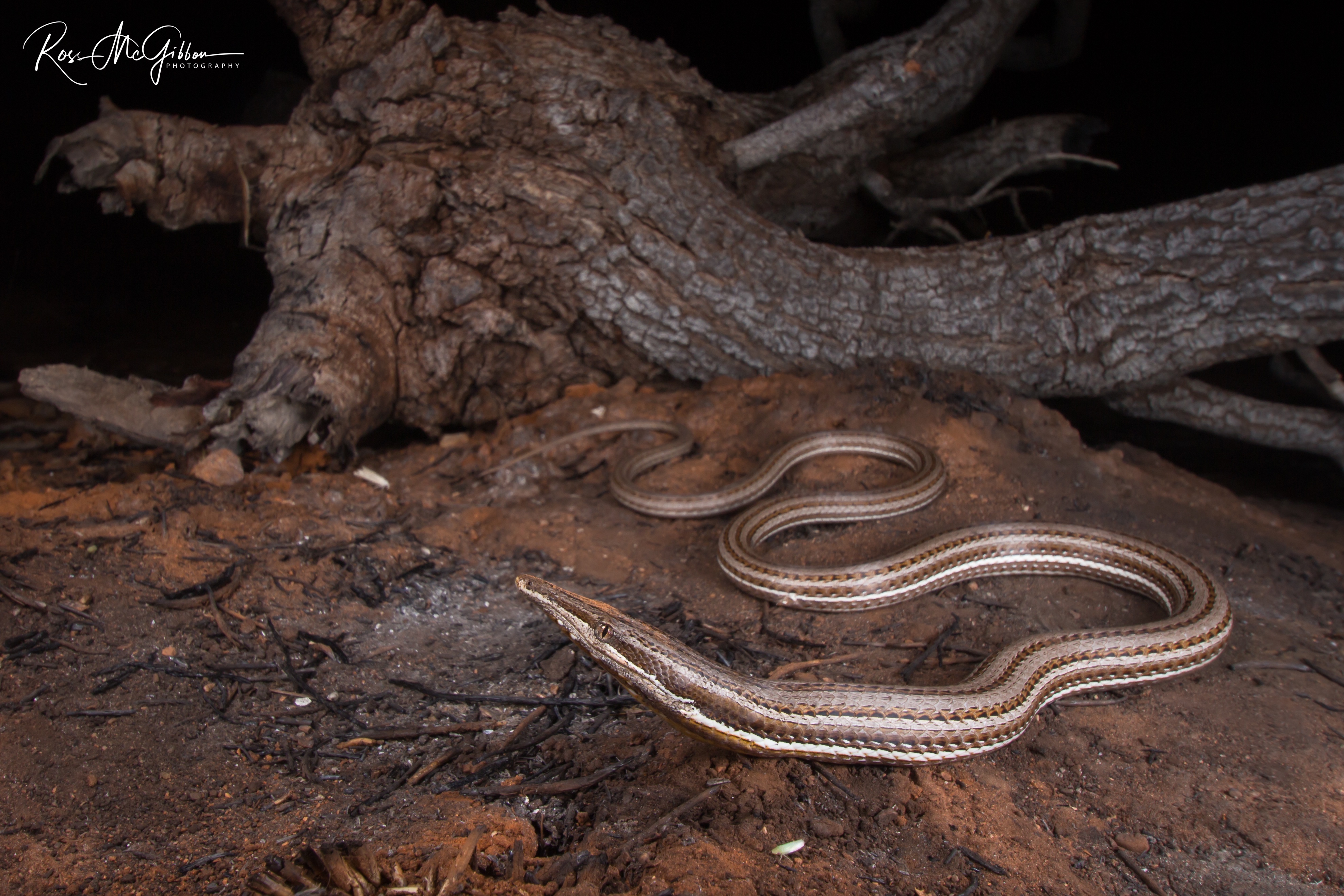
A Burton's Legless Lizard (Lialis burtonis), Exmouth, Western Australia. Australia is home to more than 40 species of legless lizards. Harmless and non-venomous, they are often mistaken for snakes and can be killed as a result.
What action can I take to prevent snakes and keep my family safe?
First and foremost, killing snakes is one of the least effective ways to protect your family and pets. It is reactive rather than proactive, potentially dangerous and does little to address why snakes are visiting your property.
There are far more practical precautions you can take.
Practical precautions
-
Learn your local snakes. Learn which species occur in your area and which are potentially dangerous. Books, field guides, mobile apps and local snake identification posters are useful resources. Local snake educators and reputable snake catchers may also be able to help.
-
Save your local snake catcher's number. Keep the number of a reputable local snake catcher in your phone so you can quickly seek advice or arrange a relocation if necessary.
-
Reduce food sources. Many Australian venomous snakes are attracted to homes, sheds and chook pens by rats and mice. Store grain and pet food in sealed containers, don't leave food accessible and use appropriate traps to control rodents.
-
Wear suitable clothing. Enclosed shoes and long trousers can reduce the chance of a bite when working or walking in areas where snakes occur. Consider gloves when gardening.
-
Take care at night. Use a torch and stick to established paths or cleared areas rather than walking through long grass or dense vegetation.
-
Reduce potential shelter. Keep timber, corrugated iron, rubbish and other materials neatly stacked and minimise clutter around buildings. Roof spaces and ceilings can also provide shelter for Carpet Pythons and tree snakes.
-
Maintain areas around your home. Keep grass short and reduce dense vegetation immediately around buildings, making snakes easier to see and reducing available cover.
-
Teach children how to respond. Children should learn that snakes are wildlife and should never be approached, touched or harmed. Teach them about the realistic risks while encouraging a healthy respect for wildlife.
-
Learn snakebite first aid. Complete a recognised first aid course and learn the recommended pressure immobilisation technique. Keep appropriate first aid supplies accessible at home, in your vehicle and when working or walking in remote areas.
-
Consider formal snake-handling training. If snakes are regularly encountered on your property, appropriate venomous snake-handling training may be an option. However, training does not automatically give you permission to catch or relocate snakes. Always follow the regulations in your state or territory.
-
Don't rely on snake repellents. Solar-powered pulse-emitting devices and chemical or oil-based products are widely marketed as snake repellents, but there is insufficient reliable evidence that they effectively keep snakes away.
Ultimately, knowledge is your best defence against snakes. Understanding the species in your area, their behaviour and what attracts them to your property will help you prevent unnecessary encounters and respond appropriately when they occur.
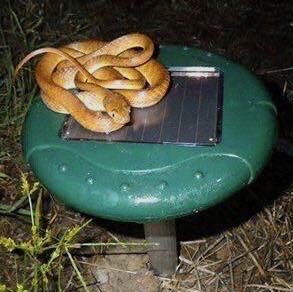
Image left: A Brown Tree Snake taking advantage of the warmth from a solar panel mounted above a so-called "snake repeller".
How can I protect my pets from snakes?
Each year in Australia, veterinarians treat thousands of domestic animals for snakebite. For pet owners, encounters between snakes and pets are a genuine risk.
Dogs can be curious or defensive towards snakes, while cats instinctively hunt and kill wildlife. When confronted by a dog or cat, a venomous snake may respond defensively and bite. Non-venomous pythons and tree snakes may also enter properties and enclosures while hunting small animals.
You can significantly reduce the risk by taking a proactive approach.
Practical precautions
-
Keep dogs under control. Walk dogs on a lead in bushland and don't allow them to investigate long grass, dense vegetation or other areas where snakes may be hiding.
-
Train your dog. Basic obedience training, particularly a reliable recall, may prevent a dog from investigating a snake. Dedicated snake-avoidance training is another option. Snake-avoidance training can reduce the likelihood of a dog approaching a snake, but it is not a guarantee that it will avoid every snake it encounters.
-
Keep your vet's details handy. Save your veterinarian's current emergency number and address in your phone so you can act quickly if a snakebite occurs.
-
Know where to go. If you live remotely, identify the nearest veterinary clinic capable of treating snakebite and know the quickest route there before an emergency occurs.
-
Consider pet insurance. Snakebite treatment can be expensive, particularly when intensive veterinary care and antivenom are required.
-
Protect small pets. Pythons and Brown Tree Snakes may enter chicken pens, aviaries and small-animal enclosures. Use appropriately sized snake-resistant mesh, ensure there are no gaps through which a snake could enter, secure enclosures properly and bring vulnerable animals inside before dark where practical.
-
Keep cats contained. Keeping cats indoors or in a secure outdoor enclosure protects them from snakes, traffic, dogs and fights with other cats, while also reducing their impact on native wildlife.
-
Supervise young pets. Puppies and kittens are particularly inquisitive and should be supervised outdoors, especially where bushland is nearby. In warmer climates and during warmer times of the year, snakes may be active both day and night, so don't assume your pets are safe simply because it isn't dark.
-
Don't allow pets to investigate snakes. Never allow a dog or cat to approach, play with or investigate a snake, even if you believe it is dead. A snake that appears dead may still move or bite reflexively.
-
Know the signs of snakebite. Symptoms can vary considerably depending on the species and the amount of venom injected. Possible signs include:
-
weakness or severe lethargy
-
difficulty walking or loss of coordination
-
shaking or twitching
-
dilated pupils
-
difficulty blinking or opening the eyes
-
vomiting
-
loss of bladder or bowel control
-
blood in the urine
-
breathing difficulties
-
excessive drooling
-
collapse or paralysis
-
bleeding from the bite site
These are only some of the possible signs, and a pet may display some, all or none of them initially.
If you suspect your pet has been bitten by a snake, don't wait for symptoms to develop. Keep your pet as calm and still as possible and seek immediate veterinary attention. Don't delay treatment while trying to identify the snake.
If you can safely obtain a photograph from a distance, it may help with identification, but never approach, handle, catch or kill the snake to get a photograph or identify it. Your priority is getting your pet to a veterinarian as quickly as possible.
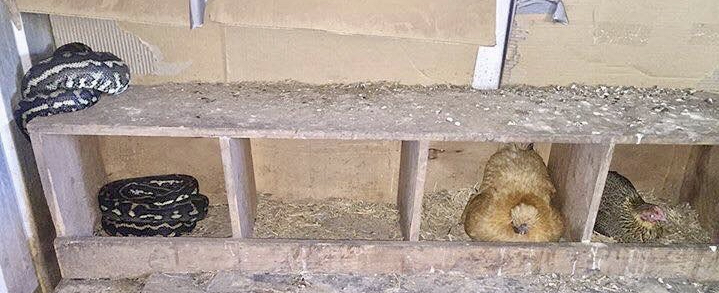
Image above: Carpet Pythons will enter almost any enclosure they can access in search of an easy meal. In this case, they were after the eggs, although larger pythons may also prey on the chickens.
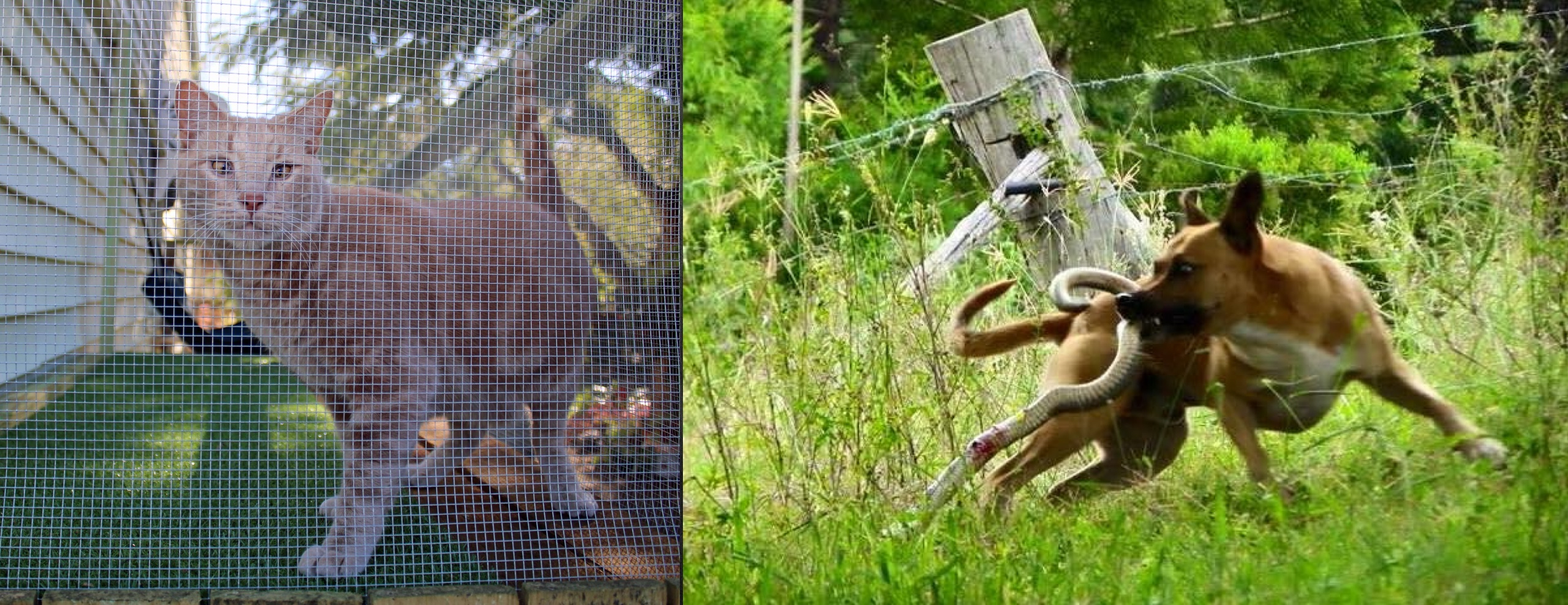
Image left: Protect small pets with secure, snake-proof steel mesh enclosures.
Image right: A dog narrowly escapes death after confronting and killing an Eastern Brown Snake.
Australian Snakebite first Aid
If you or someone you are with is bitten by a snake, following the below steps significantly improves your chances of survival.
- Remove yourself (or the patient) from danger
- Call an ambulance/ send for help. If you are alone and have no means to call for help, then apply a pressure bandage as outlined in step 4 and calmly move to where you can reach help.
- Keep the patient as still and calm as possible
- Perform the Pressure Immobilisation Technique by:
- Remove any watches or jewellery from the affected limb ASAP. If swelling occurs, these items may restrict blood flow and cause severe discomfort.
- If bitten on a limb and assuming you have the recommended minimum of 2 x bandages, apply the first bandage over the bite site as soon as possible. Elasticised bandages (10-15cm wide) are preferable over standard crepe bandages. If neither are available, clothing or other material should be used.
- Apply the second bandage, commencing at the fingers or toes of the bitten limb and extending upward, covering as much of the limb as possible. WARNING: DO NOT APPLY THE BANDAGE SO TIGHT THAT YOU CUT OFF CIRCULATION. The intention of the bandage is not to stop blood flow. The bandage should moderately compress the skin to trap the venom in the lymph (clear fluid under the skin). The bandage should be firm, and you should be unable to EASILY slide a finger between the bandage and the skin.
- If only one bandage is available, start at the fingers or toes and work upwards, firmly bandaging the entire limb and continuing over the bite site. This single bandage provides both pressure over the bite and immobilisation of the limb.
- Splint and immobilise the limb.
- Keep the patient immobilised and at rest until help arrives.
- If the patient falls unconscious and stops breathing at any stage, CPR must commence immediately. CPR takes priority over the Pressure Immobilisation Technique. If possible, use a second person to complete the Pressure Immobilisation Technique, but do not interrupt CPR to do this.
6) Monitor patient's breathing and circulation until help arrives. In some remote areas where ambulance services could be delayed or unable to access your location, it may be beneficial to begin travelling to meet the ambulance. Caution - keep the patient immobilised and at rest at all times during transport.
DO NOT cut or excise the bitten area or attempt to suck venom from the bite site.
DO NOT wash the bitten area.
DO NOT apply an arterial tourniquet. (Arterial tourniquets that cut off circulation to the limb are dangerous. Tourniquets are not recommended for any type of bite or sting in Australia)
DO NOT bandage individual fingers or toes.
DO NOT remove the bandages or splints before evaluation in an appropriate hospital environment.
References for this above info is the ARC (Australian Resuscitation Council), which is the leading body in Australia for First Aid. the information I have provided here is GENERAL INFORMATION ONLY and should not substitute formal First Aid training.
SHORT FILM: DEADLY AUSTRALIAN SNAKES & THEIR BEHAVIOUR
DON’T MISS my educational film covering everything Australians should know about venomous snakes and their behaviour.
In this short film, you'll see fascinating footage of Australian venomous snakes and learn the truth about snakebites and animal-related fatalities in Australia. I'll break down the defensive behaviours of our venomous snakes, explain what these behaviours actually mean, and demonstrate how you should respond when you encounter one.
Watch the film and learn how to better understand and safely coexist with Australia's venomous snakes.